📚 Study Resource

Chapter 1: Concept of Health & Disease

Free Article

Enhance your knowledge with our comprehensive guide and curated study materials.

Mar 21, 2026 PDF Available

Topic Overview

DEFINITIONS OF HEALTH (WHO & ECOLOGICAL CONCEPT)


WHO Definition of Health (1948)


https://images.openai.com/static-rsc-3/sYgQwpUl1ZdxU__kt1QgH2Gpv5N6J3bvGhhMg9pEe1-zOZwyojYZ6jjSV9IPuisVSrxgH3chgzoq8xt6Ae5xhD48wvw4Kcu3KwjBGgDc1IE?purpose=fullsize&v=1


https://images.openai.com/static-rsc-3/kCTxwsMh3_Wk6yADJTKDJXhDeDUNrEht0jJ4XARloDC0mMAOeg9yLzdTKnhZqW1KzKv6mBXk2TQbeBtXgyrqiSrqbCqIkMhVzf_FPqsXHH0?purpose=fullsize&v=1


https://www.who.int/images/default-source/infographics/health-promotion/infographic-health-promotion-3-pillars.jpg?sfvrsn=fec890f1_2

4

Exact Definition

  • “Health is a state of complete physical, mental and social well-being and not merely the absence of disease or infirmity.”

Key Components

  • Physical well-being
    • Normal body function
    • Absence of disease
  • Mental well-being
    • Emotional stability
    • Ability to think and cope
  • Social well-being
    • Ability to maintain relationships
    • Social integration

Criticism of WHO Definition (VERY IMPORTANT)

  • “Complete” is unrealistic
    • No person is completely healthy at all times
  • Static concept
    • Does not consider health as a dynamic process
  • Not measurable
    • Difficult to quantify “complete well-being”
  • Does not include
    • Spiritual dimension
    • Environmental factors

Modified WHO Concept (Dynamic Concept)

  • Health is a dynamic state
  • It is a continuous process of adaptation and adjustment
  • Includes:
    • Physical
    • Mental
    • Social
    • Spiritual and environmental aspects
  • Exam Line
    • Health is the ability to lead a socially and economically productive life

Ecological Definition of Health
 

https://archive.cdc.gov/www_cdc_gov/csels/dsepd/ss1978/lesson1/section8_html_files/Figure1.16.jpg


https://media.licdn.com/dms/image/v2/D4D12AQFkKd08cJ8M1w/article-cover_image-shrink_720_1280/article-cover_image-shrink_720_1280/0/1688369375903?e=2147483647&t=N2KrwgVcO6iYoXBipeb6IMx_6IZ2jHOfADhEirbrpvI&v=beta


https://media.springernature.com/lw685/springer-static/image/chp%3A10.1007%2F978-981-19-7800-5_3/MediaObjects/528477_1_En_3_Fig1_HTML.png

4

Definition

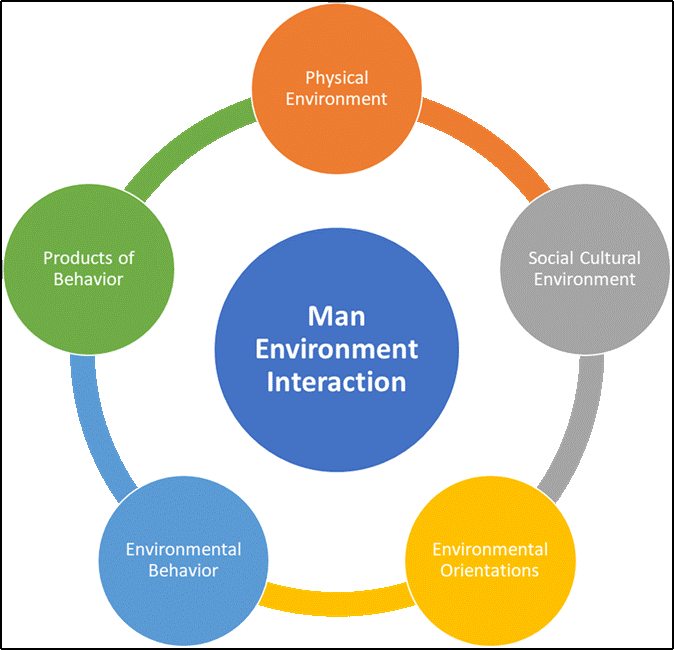
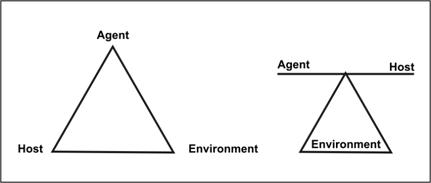
  • Health is a state of equilibrium between man and his environment

Man–Environment Balance Concept

  • Health exists when:
    • Individual is in harmony with environment
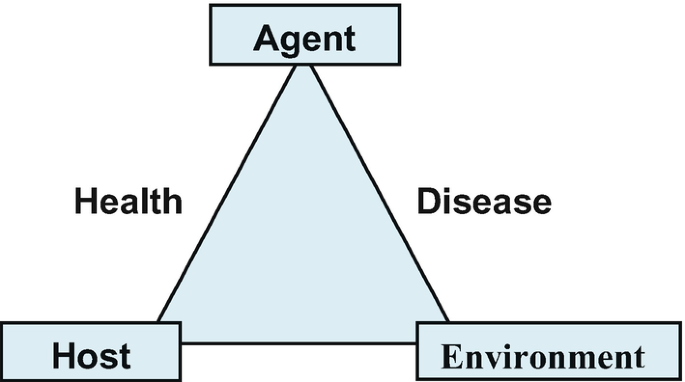
  • Disease occurs when:
    • Imbalance between:
      • Host
      • Agent
      • Environment
  • Closely related to:
    • Epidemiological triad

Examples (Adaptation Failure)

  • Cold exposure → hypothermia
  • Heat exposure → heat stroke
  • Pollution → respiratory disease
  • Malnutrition → failure to adapt to nutritional demands

Exam Quick Recall

  • WHO → Complete well-being (Physical + Mental + Social)
  • Criticism → Unrealistic + Static + Not measurable
  • Modified concept → Dynamic + productive life
  • Ecological → Balance between man & environment


PSYCHOSOCIAL, BIOMEDICAL & HOLISTIC CONCEPTS OF HEALTH (PSM Notes)


Psychosocial Definition of Health
 

https://fiveable.me/_next/image?q=75&url=https%3A%2F%2Fstorage.googleapis.com%2Fstatic.prod.fiveable.me%2Fsearch-images%252F%2522WHO_Commission_on_Social_Determinants_of_Health_Framework_socioeconomic_political_context_health_outcomes_inequities%2522-fpubh-08-00406-g001.jpg&w=3840


https://images.openai.com/static-rsc-3/0PJrXXDcdjFyvv7kmdodWCaloKLMFhjVDBofxseksHfvKpR2L3FfqN9NfT9YIK8gfyKzKP8Bm3OFCwuZjfoHwuTVBr3QTSQqzn4QhlOV5iQ?purpose=fullsize&v=1


https://www.researchgate.net/publication/381281411/figure/fig1/AS%3A11431281287440350%401730256689556/A-schematic-overview-of-chronic-stress-and-its-related-distinct-diseases-Chronic-stress.png

4

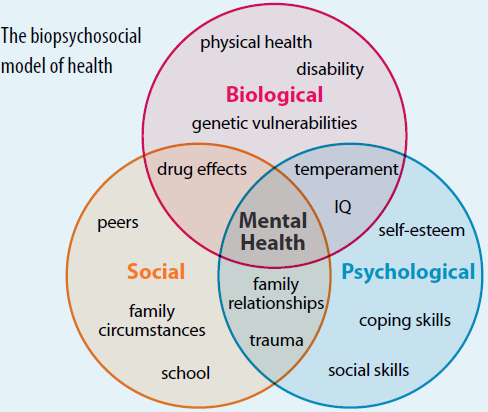
Definition

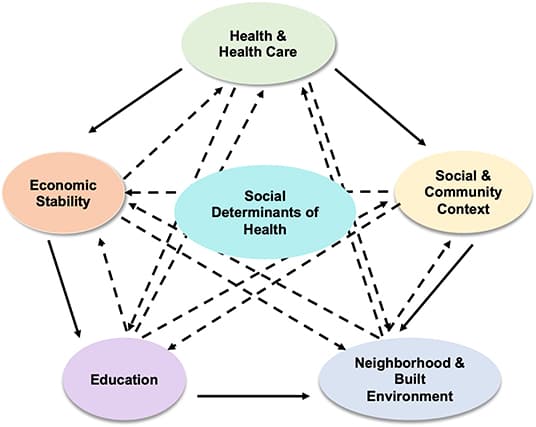
  • Health is influenced by interaction of social and psychological factors along with biological factors

Role of Social + Psychological Factors

  • Social factors
    • Income
    • Education
    • Occupation
    • Social support
  • Psychological factors
    • Stress
    • Emotions
    • Behavior
    • Personality

Influence of Culture & Beliefs

  • Cultural practices affect:
    • Diet habits
    • Hygiene
    • Health-seeking behavior
  • Beliefs influence:
    • Acceptance of treatment
    • Traditional practices

Examples

  • Stress → hypertension
  • Poverty → malnutrition
  • Cultural taboos → delayed treatment

Exam Line

  • Health is a product of biological + social + psychological interactions

Biomedical Concept of Health


https://ars.els-cdn.com/content/image/1-s2.0-S0952791517300870-gr1.jpg


https://www.researchgate.net/publication/378431376/figure/fig1/AS%3A11431281238800111%401714058367351/Treatment-after-organ-dysfunction-The-primary-causes-of-organ-dysfunction-include-tissue.tif


https://elements-resized.envatousercontent.com/elements-cover-images/1332c273-13ed-4214-8a78-e3e297f989ac?cf_fit=scale-down&format=auto&q=85&s=670bd9bbbc6432cb5101bc843f93f2726acc070b804b0d8a01f81ea4ccddb3b1&w=433

4

Definition

  • Health = absence of disease or infirmity

Key Features

  • Based on germ theory of disease
  • Focus on:
    • Diagnosis
    • Treatment
  • Emphasis on:
    • Medical care
    • Curative services

Limitations (VERY IMPORTANT)

  • Ignores:
    • Social factors
    • Psychological factors
    • Environmental factors
  • Cannot explain:
    • Chronic diseases
    • Lifestyle disorders
  • Narrow and incomplete concept

Exam Line

  • Biomedical model is disease-oriented, not health-oriented

Holistic Concept of Health ⭐
 

https://www.csupueblo.edu/health-education-and-prevention/_doc/the-nine-dimensions-of-wellness.png


https://images.openai.com/static-rsc-3/2YIfOF6JYaqfwDvYR4vhENDsaQ2H6aR505oSqIEQG8EiW2FgHN-Jo3AfnAVqaNNqxWY_fNw9sVm34kn7D1Clm0BlsHcbYRwc9ZIGoWJgChc?purpose=fullsize&v=1


https://igmpi.ac.in/public/images/Mind-Body-and-Lifestyle-Sciences.png

4

Definition

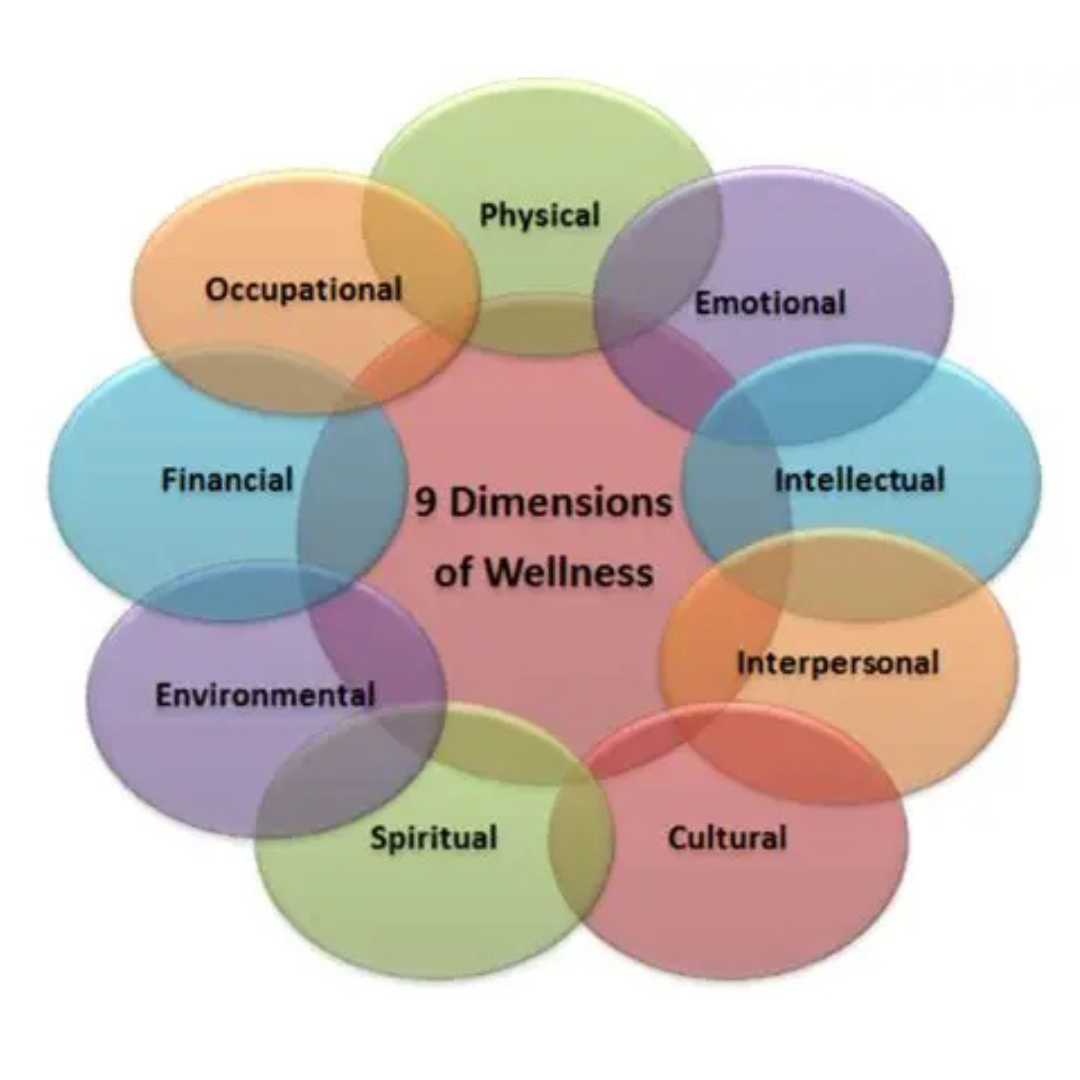
  • Health is a multidimensional concept including all aspects of human life

Integration of All Concepts

  • Combines:
    • Biomedical (disease)
    • Psychosocial (social & mental)
    • Environmental factors

Components

  • Physical
  • Mental
  • Social
  • Spiritual
  • Emotional
  • Environmental

Modern Accepted Definition

  • Health is a dynamic state of complete well-being in all dimensions

Importance in PSM

  • Basis of:
    • Preventive medicine
    • Health promotion
    • Community health
  • Helps in:
    • Comprehensive patient care
    • Multisectoral approach

Exam Line (VERY IMPORTANT)

  • Holistic concept is the most accepted modern concept of health

Quick Comparison (Exam Recall)

  • Biomedical → Absence of disease
  • Psychosocial → Social + psychological influence
  • Holistic → Integration of all (modern concept)


DIMENSIONS OF HEALTH (PSM – Detailed Exam-Oriented Notes)


Physical Dimension


https://onlinelibrary.wiley.com/cms/asset/a0ac18b7-1fb2-462d-a5b2-9ddfae798d69/obr13762-toc-0001-m.jpg?trick=1772467560994


https://images.openai.com/static-rsc-3/zHS2hme-wiZnpj2w4zrREKcWj1ADgsZXEG2oDbKRT02im3guDMGj6DFWXoyN3_yfRNd1dlyUxL_vl5rNuCPbaiUx0dtkz-WDerIPke_NpU0?purpose=fullsize&v=1


https://media.wellnesspulse.com/images/1024w/2025/06/physical-fitness.jpg

4

  • Definition → Proper functioning of body systems

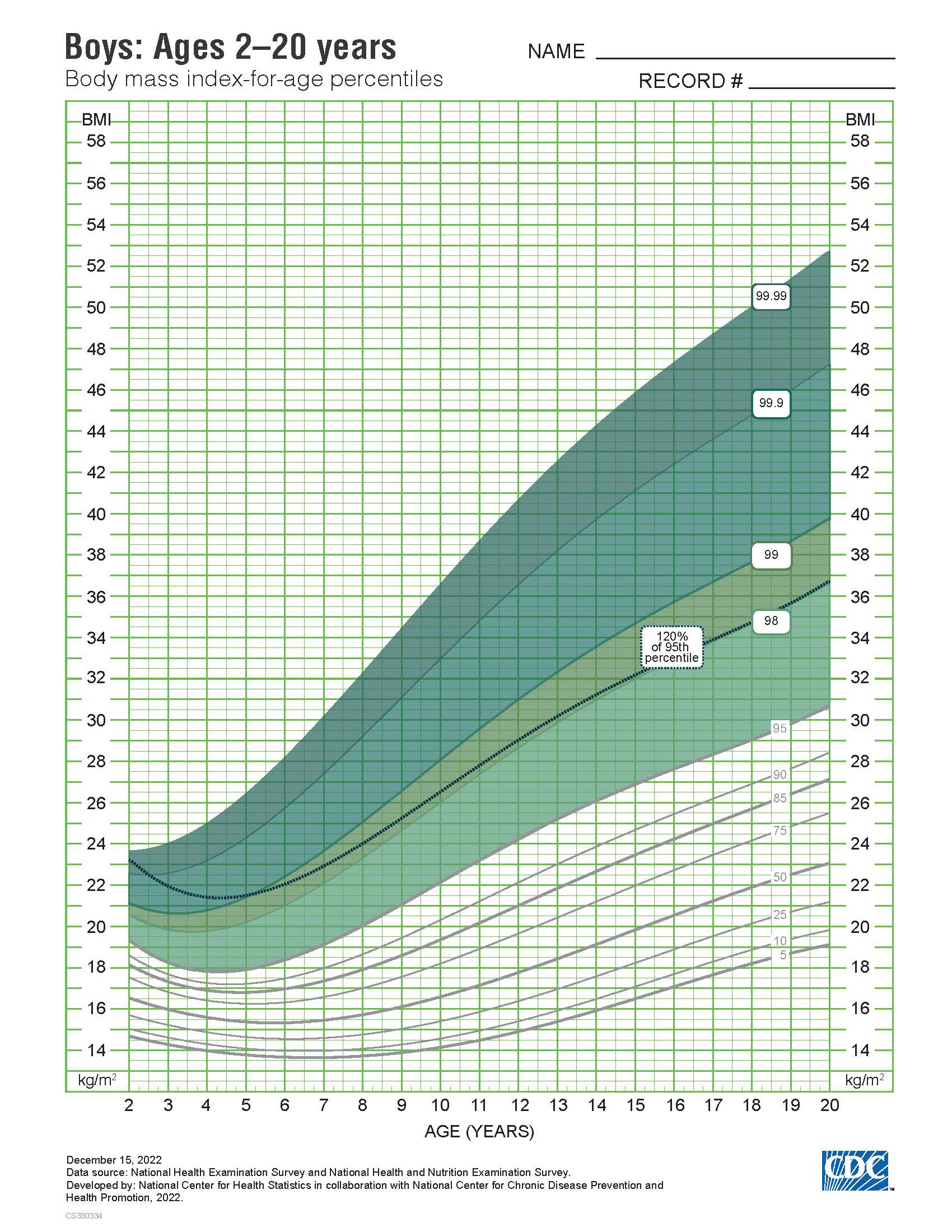
Indicators

  • BMI (Body Mass Index) ⭐
  • Morbidity rates
  • Mortality rates
  • Physical fitness level

Physical Fitness Criteria

  • Strength
  • Endurance
  • Flexibility
  • Coordination

Mental Dimension


https://media.springernature.com/full/springer-static/image/art%3A10.1038%2Fs41386-026-02332-2/MediaObjects/41386_2026_2332_Fig1_HTML.png


https://www.kenhub.com/thumbor/nFXYG7DfXdXcm8uSKCgyx-euz2k%3D/fit-in/1400x0/filters%3Afill%28FFFFFF%2Ctrue%29%3Awatermark%28/images/watermark_5000_10percent.png%2C0%2C0%2C0%29%3Awatermark%28/images/logo_url.png%2C-10%2C-10%2C0%29%3Aformat%28jpeg%29/images/overview_image/4439/6IooA54dzcpiEN8zVsYg_P3_functional_divisions_of_nervous_system_integration_TBZ_en.jpg


https://images.openai.com/static-rsc-3/CvVexWk-dXBg9AJkQKJi14_aWMm_NR-Sit6yO7HN76FpJnHk8GwWxJVKDk8AcTdpv42qmWvOqMHYREKiQIWPvdSg7kYCrl64euNijjQmGKE?purpose=fullsize&v=1

4

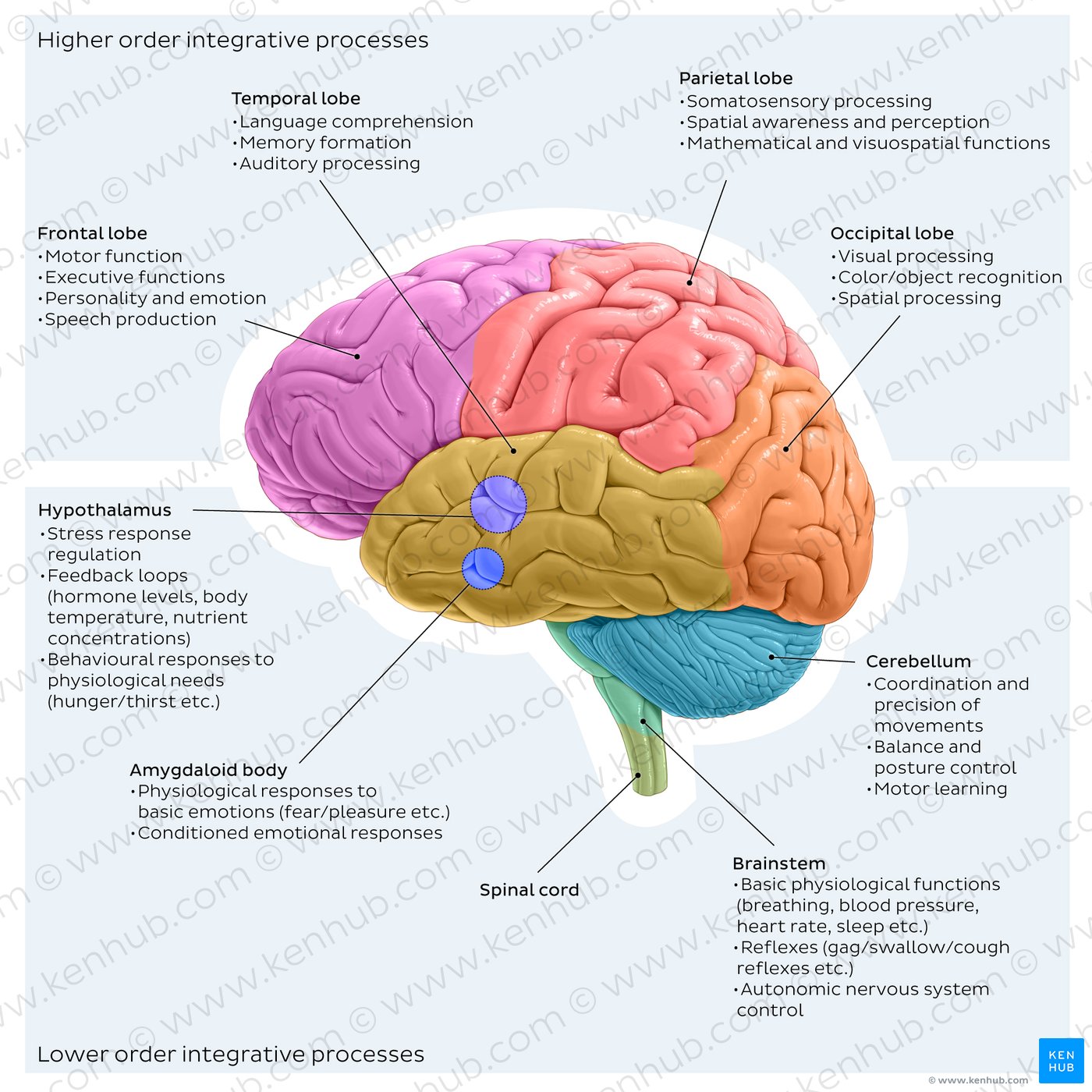
  • Definition → Ability to think, learn, and adapt

Key Components

  • Emotional stability
  • Cognitive functioning
  • Logical thinking

Indicators of Mental Well-being

  • Ability to cope with stress
  • Absence of anxiety/depression
  • Positive attitude

Social Dimension


https://imgv2-1-f.scribdassets.com/img/document/733933955/original/454ad88810/1?v=1


https://www.researchgate.net/publication/335652687/figure/fig1/AS%3A800047771955200%401567757661471/llustration-of-the-social-circles-of-an-individual-Her-family-coworkers-basketball.png


https://fastercapital.com/i/Employee-Well-being--Prioritizing-Employee-Well-being-with-Manyears-update--Fostering-Social-Support-Networks.webp

4

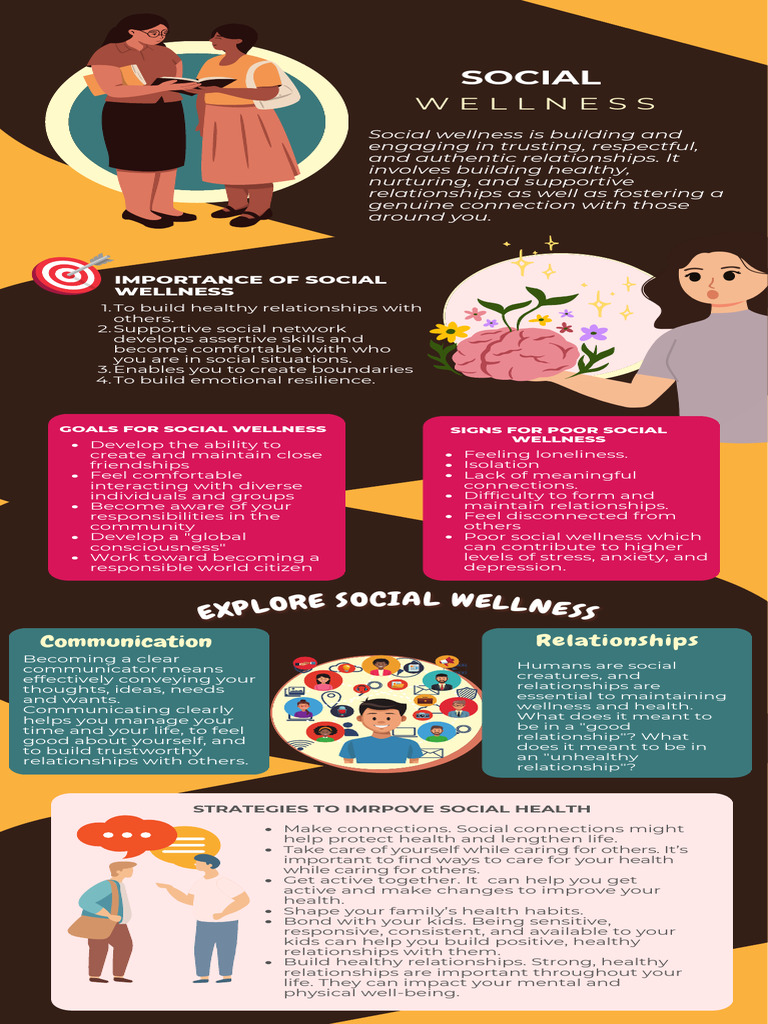
  • Definition → Ability to maintain satisfactory relationships

Components

  • Social relationships
  • Community participation
  • Performance of social roles

Spiritual Dimension


https://i.pinimg.com/736x/27/22/b5/2722b5e2468ccd996d467f4e480c2f22.jpg


https://cdn.prod.website-files.com/643420fa9df2945c7d77af2d/690a850c0a380e8272465b12_690a850cb26fef20c7a9189e_wellness-wheel-featured.jpeg


https://m.media-amazon.com/images/I/51dYCIs%2BnkL._AC_UF894%2C1000_QL80_.jpg

4

  • Definition → Search for meaning and purpose in life

Components

  • Beliefs
  • Values
  • Purpose of life

Emotional Dimension


https://www.researchgate.net/publication/341795974/figure/fig1/AS%3A11431281102895745%401669556034177/Multi-Health-Systems-Inc-EQ-I-20-model-depicting-5-emotional-intelligence-domains-and.png


https://images.openai.com/static-rsc-3/9EQRT7__YATZo2QGAYI8OvoMZl0k7oRzBsEmnRYs2wI62zLTDBrYuG1o7sOl-UVpobXzrIKRc2R3xxBsd9OypxlC77t0pb7_D_3Mzf-MTL8?purpose=fullsize&v=1


https://kidshelpline.com.au/sites/default/files/bdl_image/header-T-CWE.png

4

  • Definition → Ability to recognize and manage emotions

Components

  • Emotional control
  • Stress handling
  • Expression of feelings

Vocational Dimension


https://fastercapital.com/i/Work-Life-Balance--Job-Satisfaction--Exploring-the-Link-Between-Job-Satisfaction-and-Work-Life-Quality--The-Impact-of-Job-Satisfaction-on-Personal-Well-being.webp


https://images.openai.com/static-rsc-3/9v-8tkyOMzbIT5wk0-VXrO6UMZ9k13StudrJ0fXe-9qbf-j3-jECRrjnfzqytCXIuzzQU2IrOB8FS24z2G-KqzHUTlNBBHTLhXqBkdwV240?purpose=fullsize&v=1


https://images.openai.com/static-rsc-3/ZVTa841OMPpqGLVGsmHX9XdDesi7OpolDxEA93u-3JEVJaQiShNhzFZRsCop5n27jnk5mG2C2DY_Nl-Ae5cFuaLBtQER1h_iHY6BuV_Z0aE?purpose=fullsize&v=1

4

  • Definition → Satisfaction and fulfillment from work

Components

  • Job satisfaction
  • Work-life balance
  • Productivity

Environmental Dimension


https://images.openai.com/static-rsc-3/_6UEFCkGPZ-7vky3TL3BXCtWa4eG2j89PcziINEQLpdPVvygNSVtfwPdWxHStpNyVYir3ZX-7Lw6KsxJuja_zwqDXwbQfzeP8vO8bc-6rzI?purpose=fullsize&v=1


https://www.researchgate.net/publication/216277614/figure/fig8/AS%3A669393650466820%401536607291189/A-conceptual-sketch-of-the-sanitation-system-Within-the-boundaries-of-the-system.jpg


https://images.openai.com/static-rsc-3/m2Myb7sZ6NxJajNz3JX9zhXgCqnv6aXe6rT6jgpfevDXKEk5tER81jaPg7LaSOohCVeL6HFHAaLCuegwciBEXlceFYyPuCAwfXkXl8XDzMk?purpose=fullsize&v=1

4

  • Definition → Surroundings affecting health

Components

  • Safe environment
  • Pollution control
  • Sanitation

FREQUENTLY ASKED ADDITIONS


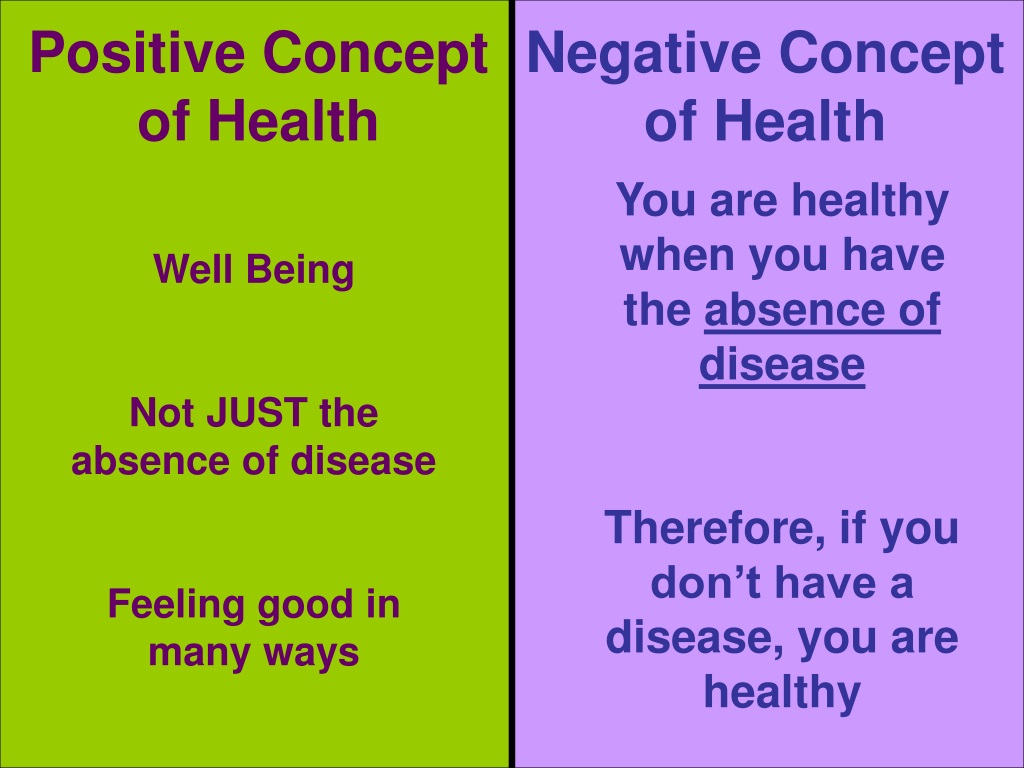
Positive vs Negative Health
 

https://image5.slideserve.com/9534847/positive-concept-of-health-l.jpg


https://img.brainkart.com/imagebk36/zps3y7D.jpg


https://images.openai.com/static-rsc-3/O-1t2z2GyFppzGbmOrqwZm-Od70JpFNs1rarkff-xUbLXBGxjRuFXmvjqSHGixToRS8kbYcjL2upcKZWw75Ep2V5UEhdEE8DIaCgmzzeulI?purpose=fullsize&v=1

4

Positive Health

  • State of well-being and vitality
  • Ability to live a productive life

Negative Health

  • Absence of disease only
  • Does not imply well-being

Exam Line

  • Modern concept focuses on positive health

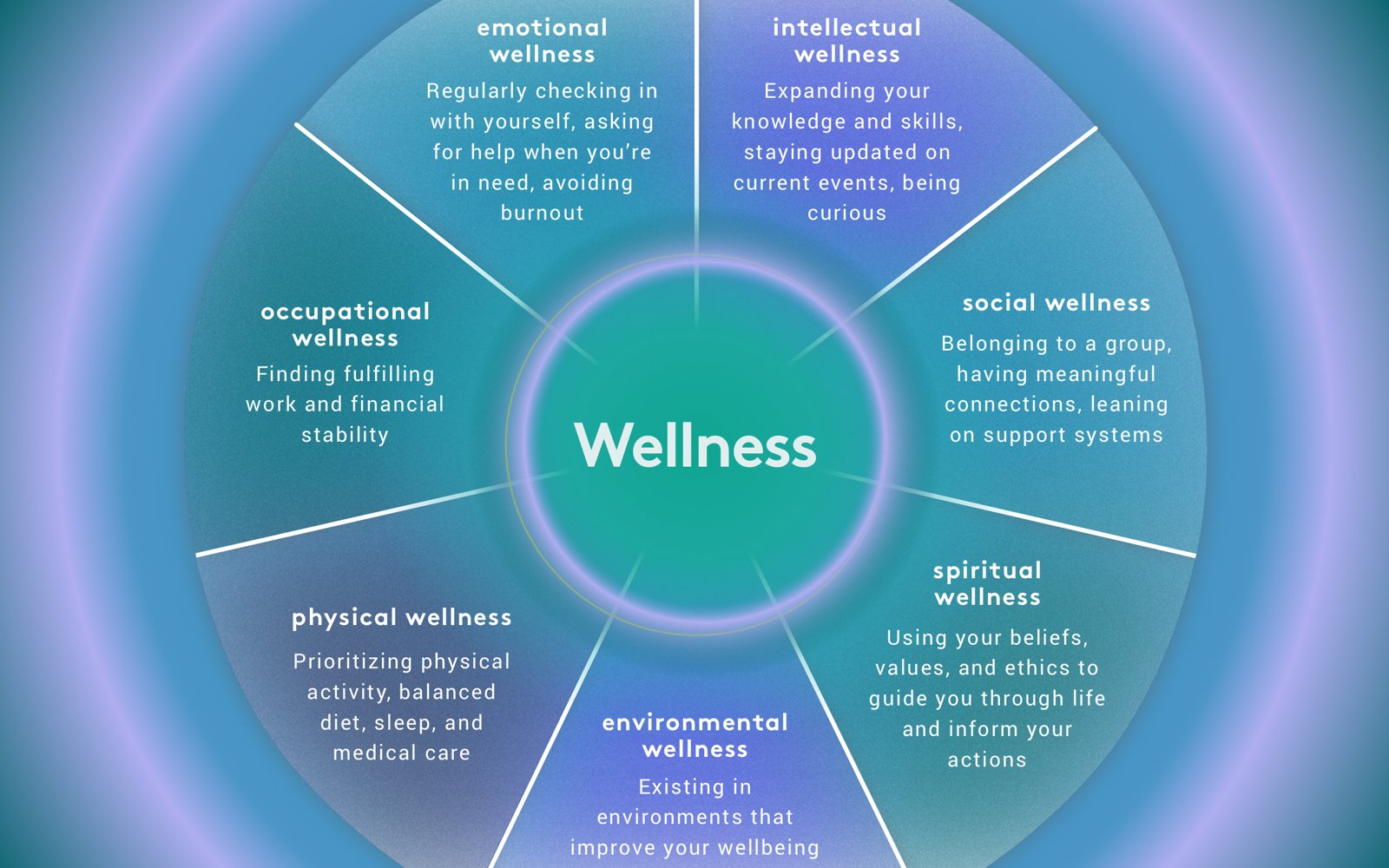
Concept of Wellness


https://images.openai.com/static-rsc-3/qVWN4SK3tqXk-KnDee9p3kDBJM4_-9CSSVP8yJHo8c2eQMZMJZI4CptipY4dbaozREDyawIFNMLrIxrS_N242rcIcR6Ku2-HJ4pEy1P7zls?purpose=fullsize&v=1


https://images.openai.com/static-rsc-3/khhinoxJ_DCbKqv-Dkgvnh2xzvgVgoL-lhE6Gk4_Fg2bSaTao-dx4lETHRQNBm6SWmq0nh2OkHONX7Ba_6-4dYtx2QKu9QyeH4WUfK5852k?purpose=fullsize&v=1


https://images.openai.com/static-rsc-3/2eD1-4xjXh5SehXjnPAqTnne-L01oJ1AtEzExd85q-3xme5QRchx304MhQpwqrpnoRfpaqiAiuef7mHlMEYp75K7nwbD-mhfHoKranQOvtg?purpose=fullsize&v=1

4

  • Definition
    A dynamic process of achieving optimal health

Key Features

  • Active process
  • Lifestyle-based
  • Focus on prevention

Components

  • Physical fitness
  • Mental peace
  • Social harmony
  • Healthy habits

Exam Line

  • Wellness is a continuous process, not a static state

FINAL EXAM SUMMARY (SUPER IMPORTANT)

  • Health has multiple dimensions
  • WHO core → Physical, Mental, Social
  • Modern → Includes spiritual, emotional, vocational, environmental
  • Positive health → Well-being
  • Wellness → Dynamic process


DETERMINANTS OF HEALTH ⭐ (PSM – Detailed Notes)


Definition


https://images.openai.com/static-rsc-3/dh1nCe2EP4Wg9y2SSnp7mbH_xoBq7-YQYGNPeEEEb68C3aOxt_IcL8pea3Z6b7BhPs51zOf1kw1qBvW6Q2lq3JaIessq1r1-kigGhuaobuw?purpose=fullsize&v=1


https://www.researchgate.net/publication/361861776/figure/fig1/AS%3A1177023926022144%401657635780221/The-main-determinants-of-health-Reproduced-with-permission-from-Dahlgren-G-and.png


https://www.physio-pedia.com/images/c/cb/Biopsychosocial-model-of-health.PNG

4

  • Definition
    Factors that influence the health status of an individual or population
  • Key Words
    • Multifactorial
    • Interrelated
    • Dynamic

Classification Overview (VERY IMPORTANT)

  • Host (Biological) factors
  • Environmental factors
  • Socioeconomic factors

1. Host Factors (Biological Factors)


https://www.mdpi.com/diseases/diseases-13-00179/article_deploy/html/images/diseases-13-00179-g001-550.jpg


https://images.openai.com/static-rsc-3/BiR65XbHBmE5yvD-FzVEA11nmK-jaunDfRnTSRgEezCoWqffn210Wo8q27eGBw8CRaIhj7WbIUS5DIDBRRYn_Ud2b5PS5wrprQ2Y6Sy2A4I?purpose=fullsize&v=1


https://images.openai.com/static-rsc-3/F6Vjl9-XJyuDsu2lscF15PbhppW-hl5Eax-sALGTQMVvJXNBcaRvI1w3Gm3OLMd5l0xyuTHBfWXte3lZc3zYz3FUW32pFTeNCaMxI6q9xyY?purpose=fullsize&v=1

4

  • These are intrinsic factors related to the individual

Age

  • Health varies with age
  • Examples
    • Infants → infections, malnutrition
    • Elderly → chronic diseases
  • Exam Point
    • Important determinant of morbidity and mortality

Sex

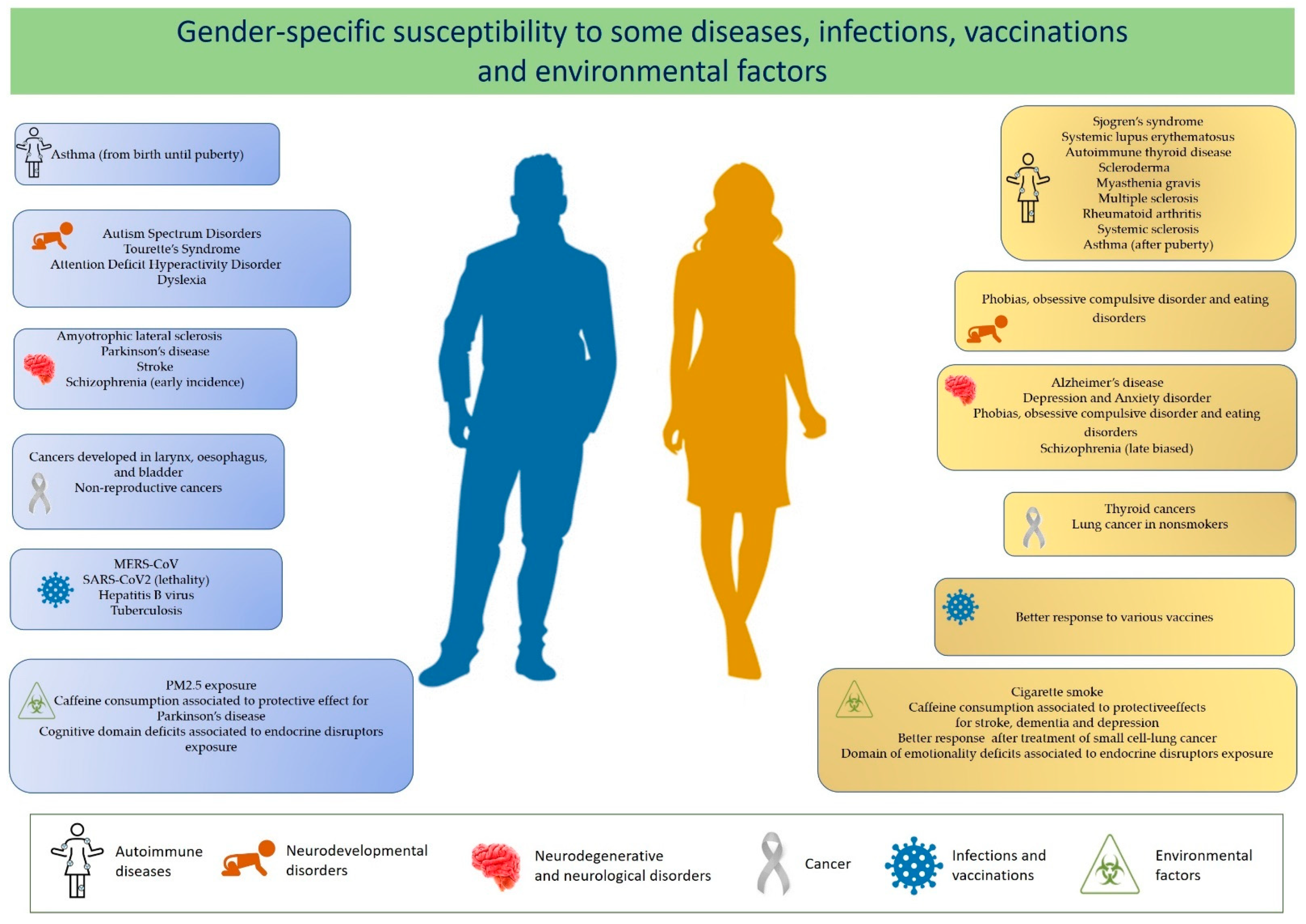
  • Biological differences affect disease pattern
  • Examples
    • Females → anemia, autoimmune diseases
    • Males → higher risk of accidents, cardiovascular diseases

Genetics (Heredity)

  • Determines susceptibility to disease
  • Examples
    • Diabetes mellitus
    • Hypertension
    • Hemophilia
  • Exam Line
    • These are non-modifiable determinants

2. Environmental Factors


https://images.openai.com/static-rsc-3/JndyOv-hxOB4RHX7Fpklt0AM1Ii1J12cE-pm2sEOZan-dZsteNPMcXw7BQCobO2CGN_EDmxTt7UAKoDZeuXSTIYJOGICl-oJcN50iN9dxdc?purpose=fullsize&v=1


https://images.openai.com/static-rsc-3/2Y9D6xCgy_GARgSezt6B5yo561fQTNIgeiI32XeRJ-5WjZBf2l-cK6KFWAXlVUsjTcI_s27AfQfNfhtsiJdhxSD70oUPNk-geH_YBs1Xkmw?purpose=fullsize&v=1


https://cdn.who.int/media/images/default-source/infographics/housing/keeping-the-vector-out-en.jpg?sfvrsn=e598accb_2

4

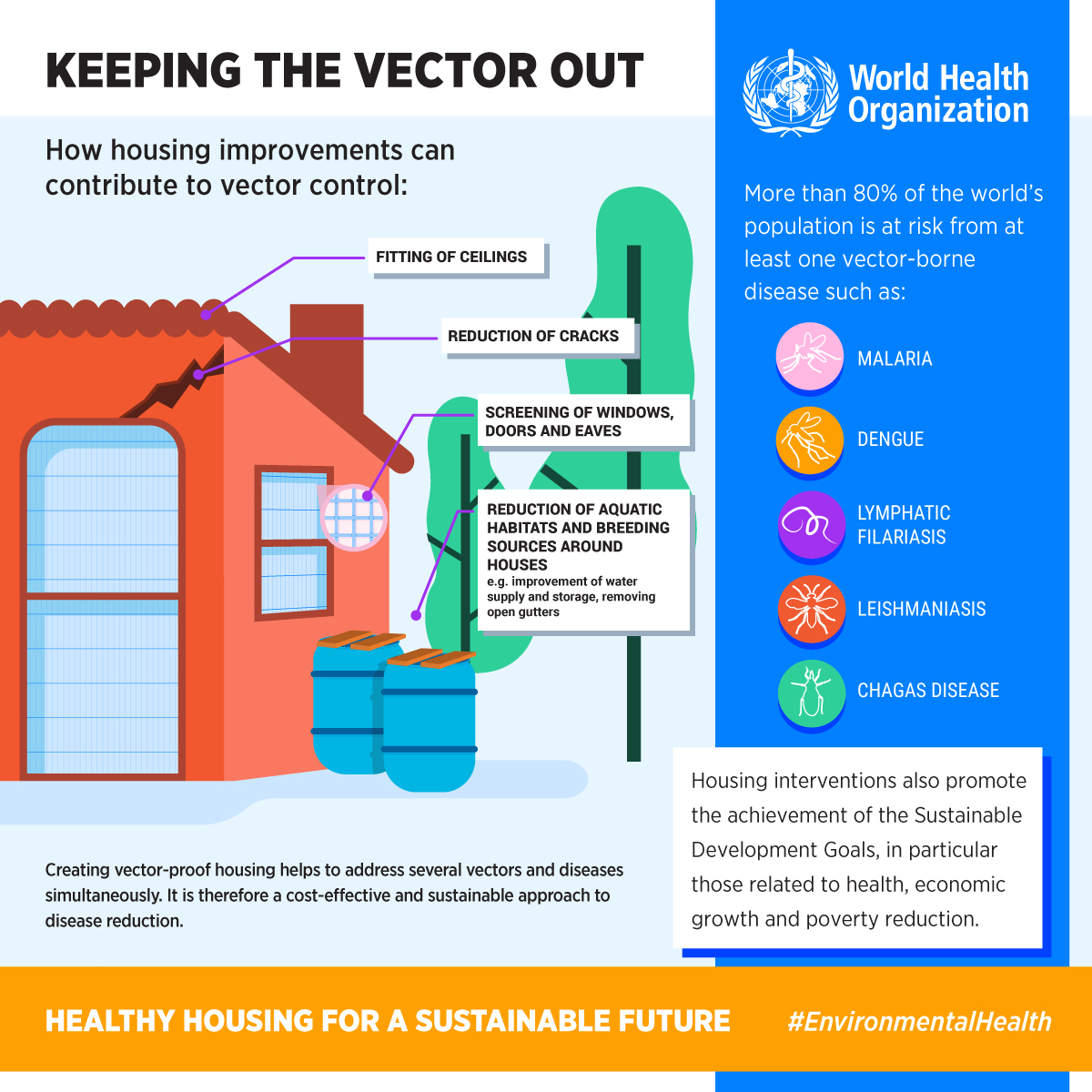
  • External factors affecting health

Types

  • Physical
    • Air, water, housing, climate
  • Biological
    • Bacteria, viruses, vectors
  • Social
    • Culture, customs, traditions

Examples

  • Contaminated water → diarrhea
  • Air pollution → COPD
  • Overcrowding → TB

Exam Line

  • Major role in communicable diseases

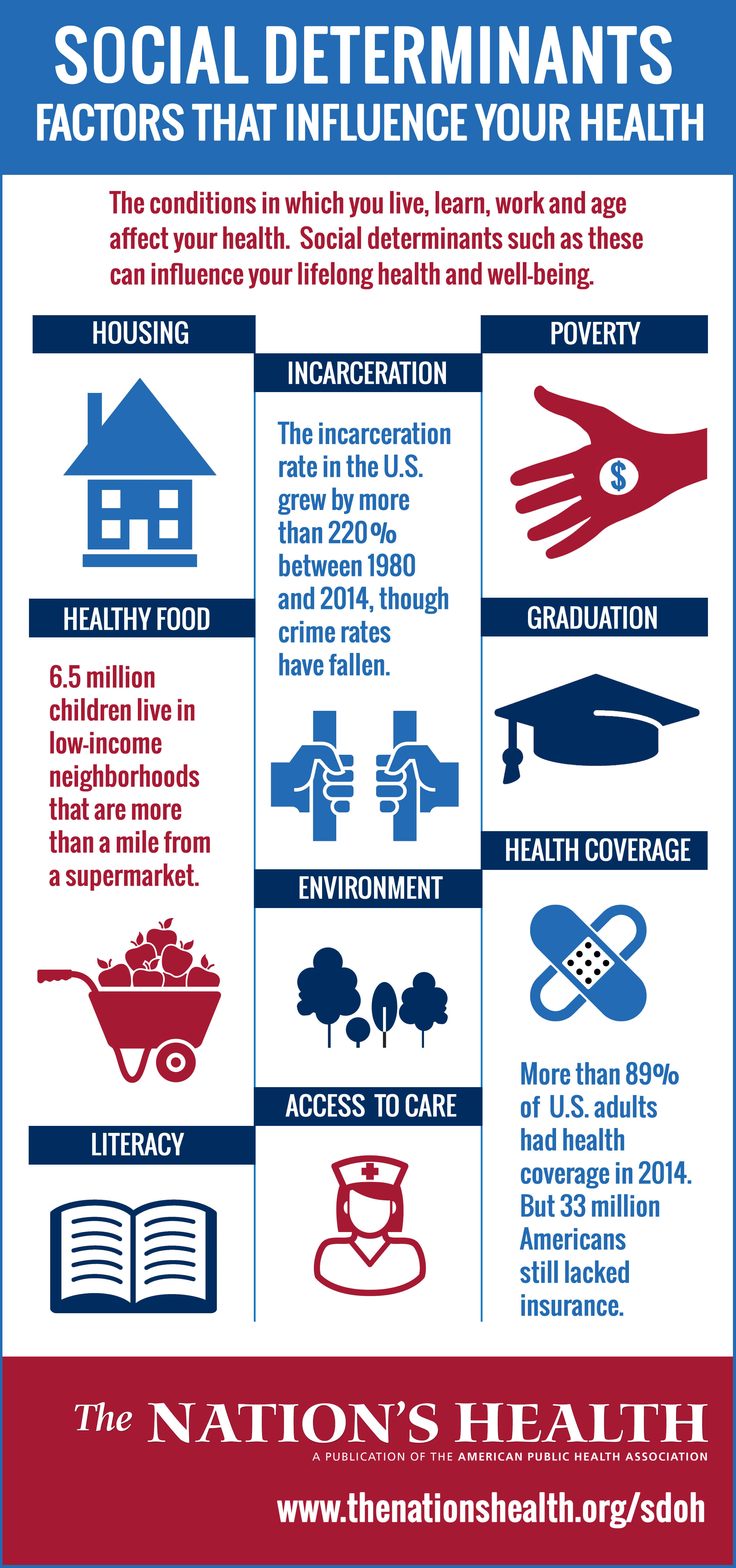
3. Socioeconomic Factors (MOST IMPORTANT)


https://www.thenationshealth.org/sites/default/files/additional-assets/images/NHInfographicSDOH-SMALLPREVIEW.jpg


https://d1xzxglpo1zn8i.cloudfront.net/web/model-answer-images/8.%20Vicious%20cycle%20of%20poverty.jpg


https://images.openai.com/static-rsc-3/MQ3Eo9P5qHiYcQWxlOkwwROKqoQYwyFzw8DTetKfv2TnVmUUuaGVevRXgUk7oBi62A1Itn7CsNUWJb7tAcEPFK90jQaKO_9ajoJWvGcCZd0?purpose=fullsize&v=1

4

  • Most powerful determinants of health

Income

  • Determines:
    • Nutrition
    • Housing
    • Access to healthcare
  • Example
    • Poverty → malnutrition

Education

  • Improves:
    • Awareness
    • Hygiene
    • Health-seeking behavior
  • Example
    • Educated mother → better child survival

Occupation

  • Influences:
    • Exposure to hazards
    • Economic status
  • Examples
    • Miners → pneumoconiosis
    • Factory workers → injuries

Exam Line

  • Socioeconomic status is the strongest determinant of health

FINAL EXAM SUMMARY

  • Determinants are multifactorial
  • Host → Age, sex, genetics
  • Environment → Physical, biological, social
  • Socioeconomic → Most important

High-Yield MCQs

  • Non-modifiable → Age, sex, genetics
  • Most important → Socioeconomic factors
  • Environmental → Communicable diseases


DETERMINANTS OF HEALTH (EXPANDED – PSM NOTES ⭐)


1. Behavioural & Lifestyle Factors (MOST MODIFIABLE)


https://media.springernature.com/lw685/springer-static/image/chp%3A10.1007%2F978-3-031-53705-9_5/MediaObjects/503923_1_En_5_Fig1_HTML.jpg


https://www.nutrition-and-you.com/image-files/healthy-habits.png


https://www.thenationshealth.org/sites/default/files/additional-assets/images/NHInfographicSDOH.jpg

4

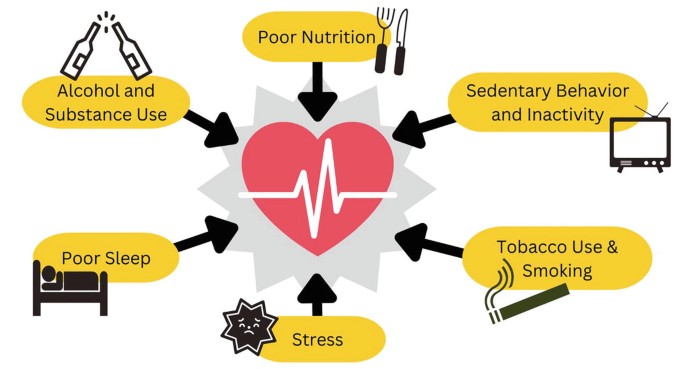
  • These are individual habits influencing health

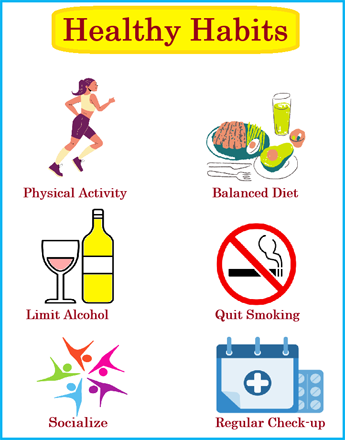
Diet

  • Balanced diet → good health
  • Malnutrition → infections, stunting
  • Excess calories → obesity, diabetes

Smoking

  • Causes:
    • Lung cancer
    • COPD
    • Cardiovascular disease

Alcohol

  • Leads to:
    • Liver cirrhosis
    • Accidents
    • Mental disorders

Physical Activity

  • Regular exercise → reduces NCD risk
  • Sedentary lifestyle → obesity, HTN

Exam Line

  • Lifestyle factors are the most important modifiable determinants

2. Environmental Factors


https://images.openai.com/static-rsc-3/KCkO4t_mQEV_VGtSVSASZDdO9mQS8_NZRZN9wZ1FKQlWnYocQnJ_mvZRgXvAtp1ff_b0mDSVvY3DTP_Tq2FG0hOHKIFRLK8fKNBaFzSDtNg?purpose=fullsize&v=1


https://images.openai.com/static-rsc-3/2Y9D6xCgy_GARgSezt6B5yo561fQTNIgeiI32XeRJ-5WjZBf2l-cK6KFWAXlVUsjTcI_s27AfQfNfhtsiJdhxSD70oUPNk-geH_YBs1Xkmw?purpose=fullsize&v=1


https://images.openai.com/static-rsc-3/cyiUjDSvTZEbeNnJUlqpyVmI3PTipMDn8uTaP8oBaTFS7BkOaZo9TE0g_7mfKN39_ZU2NlDtbCVMydnXwE4_JfB_RtgTgHgk_dpv8qwYmH8?purpose=fullsize&v=1

4


Physical Environment

  • Air, water, housing, climate
  • Examples
    • Air pollution → asthma
    • Unsafe water → diarrhea

Biological Environment

  • Microorganisms, vectors
  • Examples
    • Mosquito → malaria
    • Bacteria → infections

Social Environment

  • Culture, customs, traditions
  • Examples
    • Food habits
    • Health practices

Exam Line

  • Environmental factors are crucial in communicable diseases

3. Socioeconomic Factors (MOST POWERFUL)


https://images.openai.com/static-rsc-3/MmE2et0Wfub8BB5dXiuwFqZPOsVlyOBQbMx4DJv7_2DjhPVWBGHzKy3xDzRXZpy-Vq7mDsJ7q4I2xPzR0JQPi2nsUK8Cv1fi-BxtgkK3dPQ?purpose=fullsize&v=1


https://www.researchgate.net/publication/360313464/figure/fig1/AS%3A11431281254507748%401719215042973/Vicious-cycle-of-malnutrition-and-infection-and-its-impacts-on-morbidity-mortality-and.tif


https://www.verywellmind.com/thmb/UOAA94cNA1OGxSzcysWo0_vn89o%3D/1500x0/filters%3Ano_upscale%28%29%3Amax_bytes%28150000%29%3Astrip_icc%28%29/the-stages-of-change-2794868-7349fcb2028c4b6d9e8ecdd73b677620.png

4


Income

  • Determines:
    • Nutrition
    • Living conditions
    • Healthcare access

Poverty & Health Relation

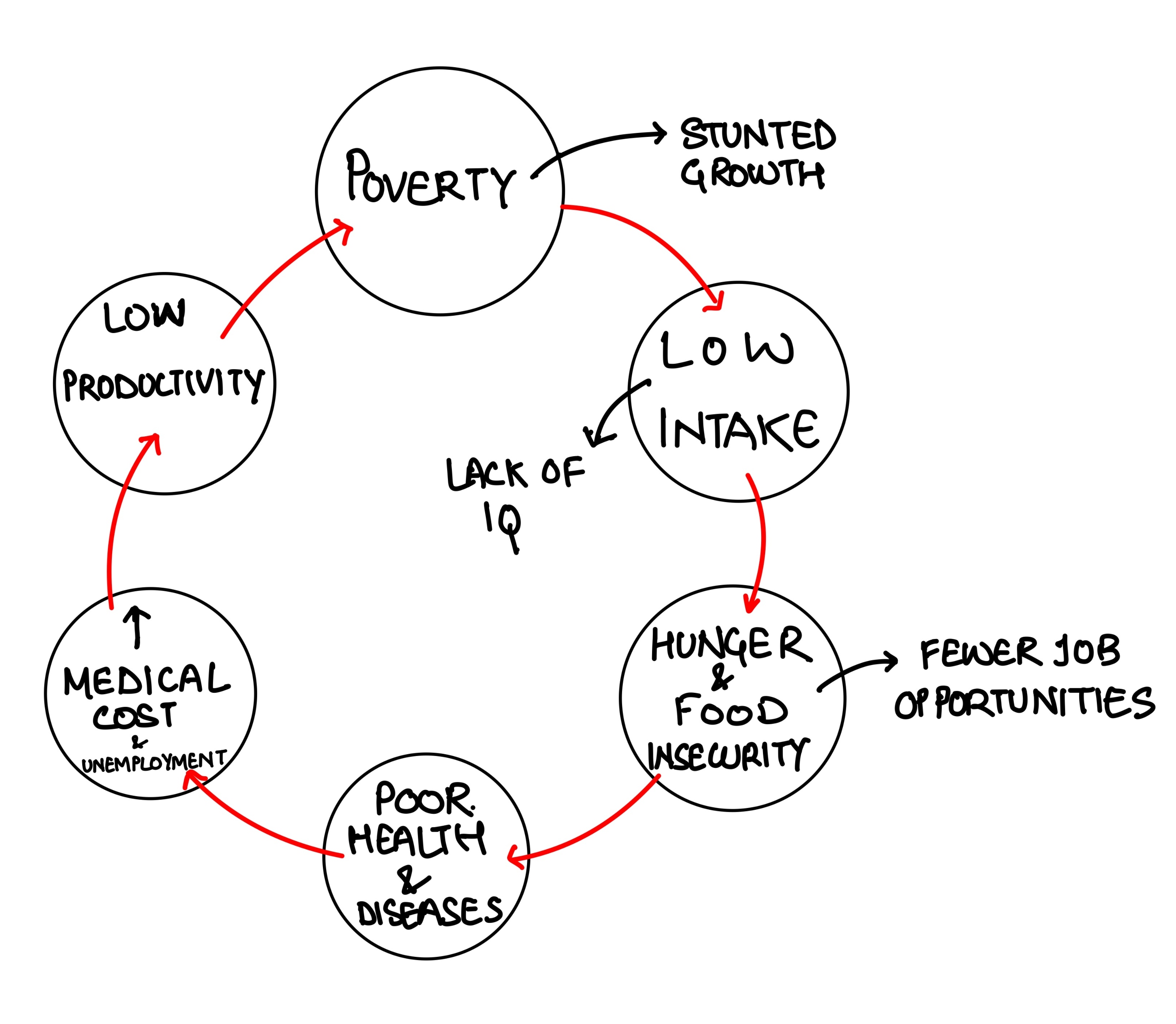
  • Poverty → malnutrition → disease → more poverty (vicious cycle)

Education

  • Improves:
    • Health awareness
    • Hygiene
    • Utilization of services

Health Awareness

  • Leads to:
    • Early diagnosis
    • Prevention

Occupation

  • Determines:
    • Income
    • Exposure to risk

Occupational Hazards

  • Dust → pneumoconiosis
  • Chemicals → poisoning
  • Noise → hearing loss

Exam Line

  • Socioeconomic factors are the strongest determinants of health

4. Political System


https://cdn.who.int/media/images/default-source/infographics/uhc-srh/handbook-phc-integration.tmb-549v.jpg?sfvrsn=6c14003e_1


https://www.researchgate.net/publication/326567457/figure/fig1/AS%3A651738994450433%401532398093669/Three-dimensions-of-universal-health-coverage.png


https://static.pib.gov.in/WriteReadData/userfiles/image/image0135KL0.jpg

4


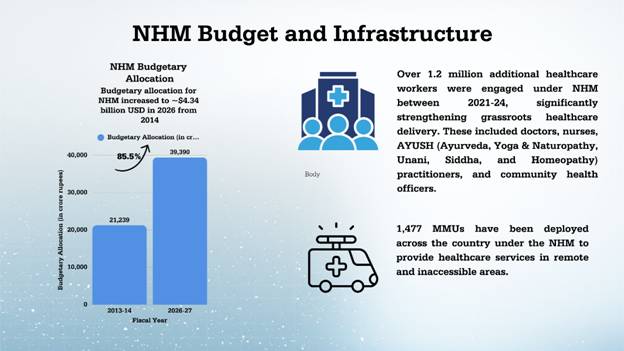
Health Policies

  • Decide:
    • National health programs
    • Preventive strategies

Resource Allocation

  • Distribution of:
    • Funds
    • Infrastructure
    • Workforce

Examples

  • Immunization programs
  • Ayushman Bharat

Exam Line

  • Political system determines health priorities of a country

5. Health Services


https://www.researchgate.net/publication/327295098/figure/fig1/AS%3A865473415634954%401583356350883/Different-Levels-of-health-care-system.png


https://stg-uploads.slidenest.com/template_1060/templateColor_1077/previewImages/health-care-access-and-equity-infographics-powerpoint-google-slides-keynote-presentation-template-2.jpeg


https://website-assets.studocu.com/img/document_thumbnails/c53c5e068df95ae532ce7f23c6c1c3f7/thumb_1200_1696.webp

4


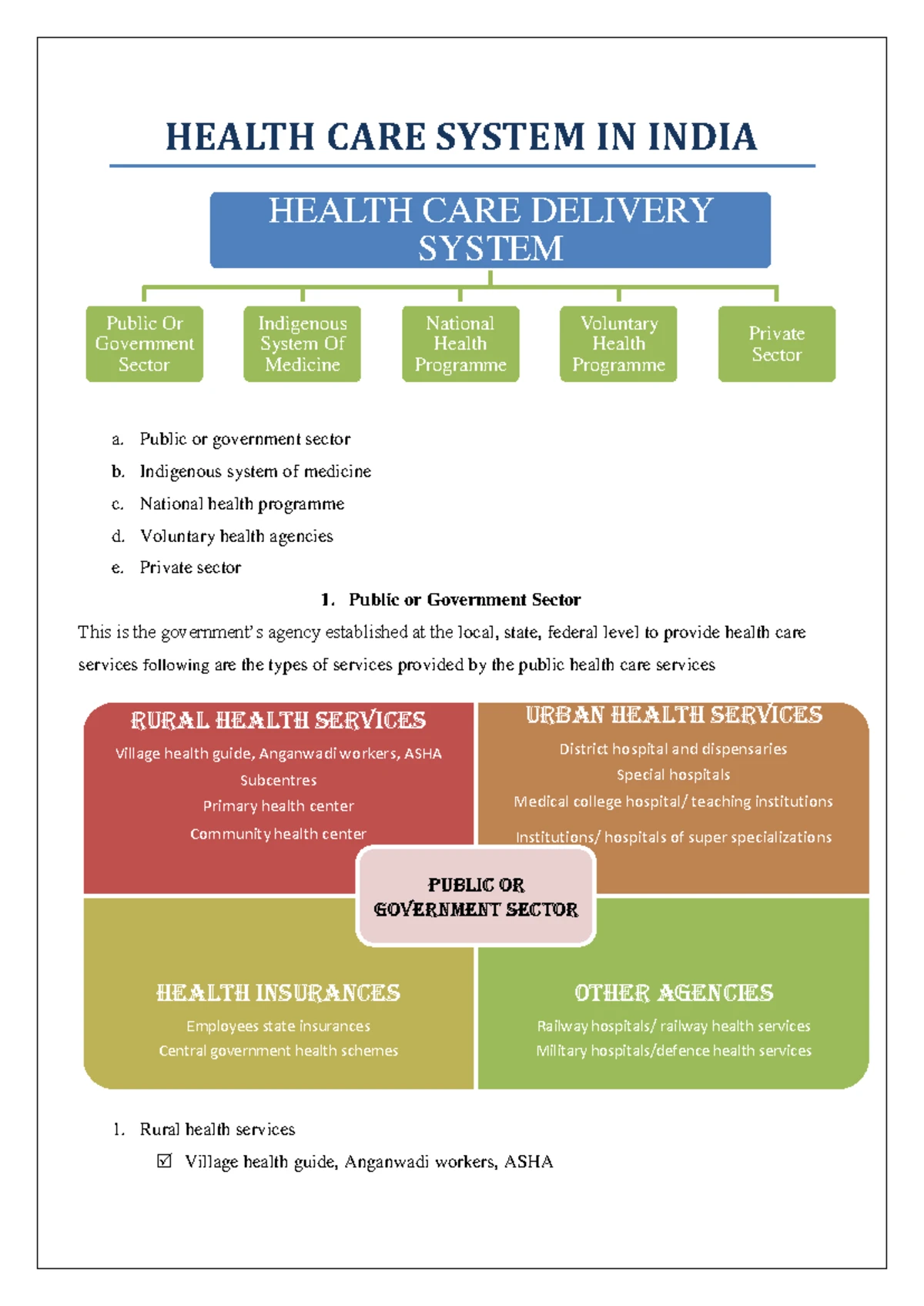
Availability

  • Presence of health facilities
  • Example → PHC, hospitals

Accessibility

  • Physical + financial access

Utilization

  • Actual use of services
  • Example → OPD visits, immunization uptake

Exam Line

  • Effective health services improve health outcomes

IMPORTANT ADDITIONS (VERY HIGH-YIELD)


Dahlgren & Whitehead Model (Rainbow Model)


https://www.researchgate.net/publication/303321662/figure/fig1/AS%3A363205286219778%401463606296831/Dahlgren-and-Whitehead-1991-model-of-the-determinants-of-health.png


https://www.researchgate.net/publication/49951184/figure/fig1/AS%3A305796920430593%401449919075659/Rainbow-model-of-the-determinants-of-health.png


https://www.researchgate.net/publication/321857508/figure/fig1/AS%3A11431281209454171%401701794571436/Ecological-model-five-levels-of-influence-on-health_Q320.jpg

4

Layers

  • Innate factors → age, sex, genetics
  • Individual lifestyle factors
  • Social & community networks
  • Living & working conditions
  • General socioeconomic, cultural, environmental conditions

Exam Line

  • Demonstrates multilevel influence on health

Concept of Social Determinants of Health


https://images.openai.com/static-rsc-3/MmE2et0Wfub8BB5dXiuwFqZPOsVlyOBQbMx4DJv7_2DjhPVWBGHzKy3xDzRXZpy-Vq7mDsJ7q4I2xPzR0JQPi2nsUK8Cv1fi-BxtgkK3dPQ?purpose=fullsize&v=1


https://www.researchgate.net/publication/278826883/figure/fig1/AS%3A669571753185288%401536649754392/Determinants-of-social-inequalities-in-health.png


https://images.openai.com/static-rsc-3/0PJrXXDcdjFyvv7kmdodWCaloKLMFhjVDBofxseksHfvKpR2L3FfqN9NfT9YIK8gfyKzKP8Bm3OFCwuZjfoHwuTVBr3QTSQqzn4QhlOV5iQ?purpose=fullsize&v=1

4

  • Definition
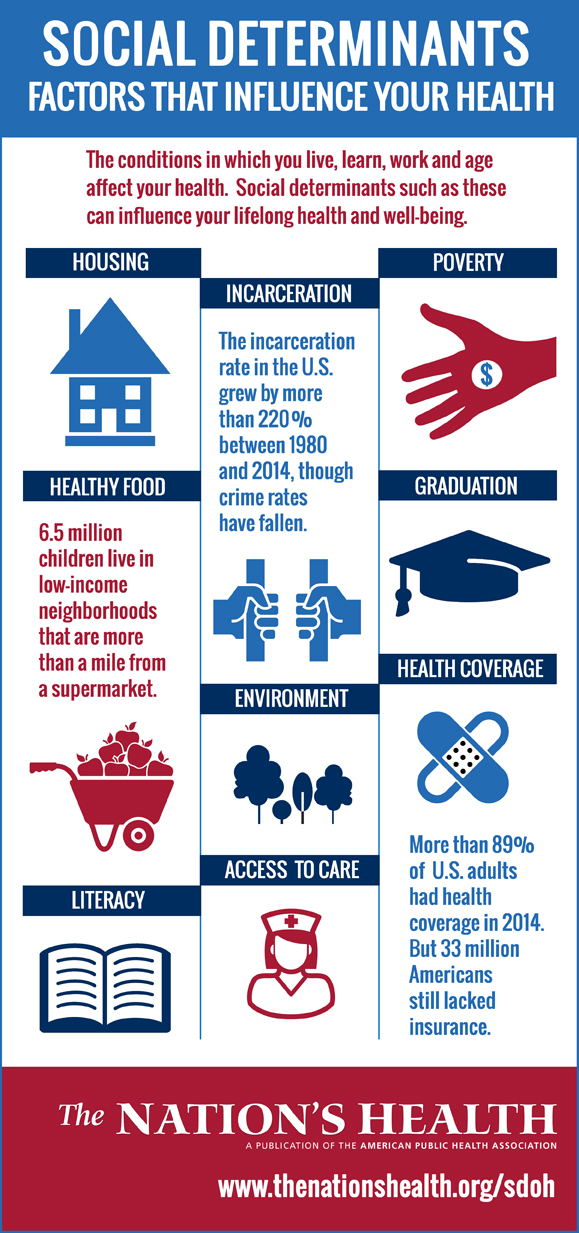
    • Conditions in which people are born, grow, live, work, and age

Examples

  • Income
  • Education
  • Housing
  • Employment

Importance

  • Explains health inequalities
  • Basis of public health planning

Exam Line

  • Social determinants are central to health equity

FINAL EXAM SUMMARY (SUPER IMPORTANT)

  • Behavioural → modifiable (most important for prevention)
  • Environmental → communicable diseases
  • Socioeconomic → strongest determinant
  • Political → policy + resources
  • Health services → availability + utilization
  • Dahlgren model → layered approach
  • Social determinants → health inequality concept


INDICATORS OF HEALTH ⭐ (PSM – Detailed Exam Notes)


Introduction


https://www.researchgate.net/publication/374386250/figure/fig5/AS%3A11431281205804092%401700457123649/Health-indicators-framework-Classification-and-examples-of-health-indicators-as-health.png


https://www.researchgate.net/publication/357576704/figure/fig1/AS%3A1108759237673016%401641360210733/diagram-organizing-population-health-indicators-along-the-quantity-quality-and.png


https://www.slideteam.net/media/catalog/product/cache/1280x720/o/n/one_page_health_status_indicators_report_presentation_infographic_ppt_pdf_document_slide01.jpg

4

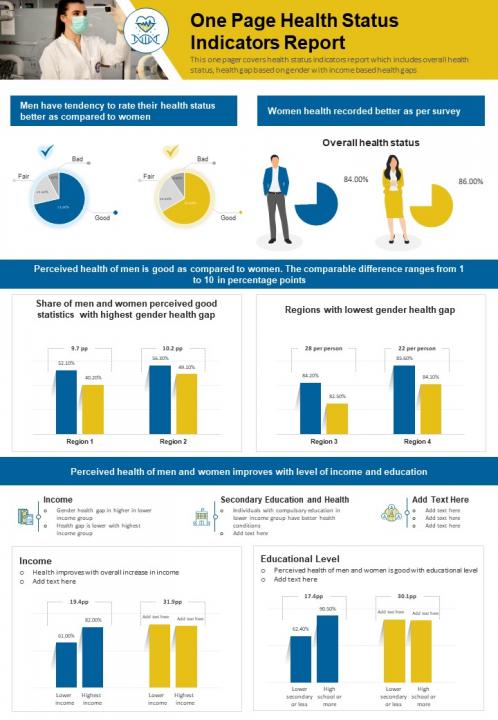
  • Health indicators are essential tools in public health measurement
  • Used for:
    • Assessing health status
    • Comparing populations
    • Planning and evaluating health services

Definition of Indicators

  • Indicators of health
    Variables that measure and reflect the health status of a community

Characteristics of an Ideal Indicator

  • Valid → measures what it is supposed to measure
  • Reliable → gives consistent results
  • Sensitive → detects small changes
  • Specific → reflects only the intended condition
  • Feasible → easy to collect and interpret
  • Relevant → useful for decision-making

MORTALITY INDICATORS ⭐
 

https://static.pib.gov.in/WriteReadData/userfiles/image/image001CJTQ.jpg


https://www.lifeexpectancy.org/images/survival.jpg


https://ars.els-cdn.com/content/image/1-s2.0-S152169341630030X-gr3.jpg

4


Crude Death Rate (CDR)

  • Definition
    Number of deaths per 1000 population in a year
  • Formula
    CDR = (Total deaths / Mid-year population) × 1000
  • Example
    • 1000 deaths in population of 1,00,000 → CDR = 10/1000
  • Note
    • Simple but least sensitive indicator

Infant Mortality Rate (IMR) ⭐

  • Definition
    Number of deaths of children <1 year per 1000 live births
  • Formula
    IMR = (Deaths <1 year / Live births) × 1000
  • Example
    • 50 infant deaths out of 2000 births → IMR = 25
  • Importance
    • Most sensitive indicator of health
    • Reflects maternal & child health

Under-5 Mortality Rate (U5MR)

  • Definition
    Number of deaths of children <5 years per 1000 live births
  • Example
    • Includes infant + preschool mortality
  • Importance
    • Indicator of child survival

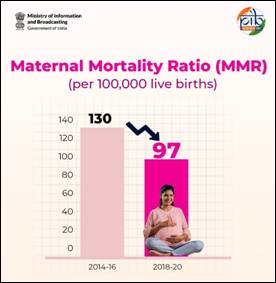
Maternal Mortality Ratio (MMR)

  • Definition
    Number of maternal deaths per 100,000 live births
  • Formula
    MMR = (Maternal deaths / Live births) × 100,000
  • Example
    • 10 maternal deaths per 10,000 births → MMR = 100
  • Importance
    • Reflects quality of obstetric care

Life Expectancy at Birth ⭐

  • Definition
    Average number of years a newborn is expected to live
  • Example
    • India ~ 69–70 years
  • Importance
    • Best indicator of overall development

Case Fatality Rate (CFR)

  • Definition
    Proportion of deaths among diagnosed cases of a disease
  • Formula
    CFR = (Deaths due to disease / Total cases of disease) × 100
  • Example
    • 10 deaths out of 100 cases → CFR = 10%
  • Importance
    • Indicates severity of disease

MORBIDITY INDICATORS


https://cdn.technologynetworks.com/tn/images/body/incidencevsprevalence_v2-031578499009626.png


https://www.populationmedicine.eu/f/fulltexts/200821/PM-7-02-g002.jpg


https://ourworldindata.org/grapher/burden-of-disease-by-cause.png

4


Incidence

  • Definition
    Number of new cases of a disease occurring in a population during a specified period
  • Formula
    Incidence = (New cases / Population at risk) × 1000 (or 100,000)
  • Example
    • 100 new TB cases in 1 lakh population → incidence = 100/100,000
  • Importance
    • Measures risk of developing disease

Prevalence

  • Definition
    Total number of existing cases (new + old) in a population at a given time
  • Types
    • Point prevalence
    • Period prevalence

Formula

  • Prevalence = (Total cases / Total population) × 100

Example

  • 500 total diabetes cases in 10,000 population → prevalence = 5%

Importance

  • Measures burden of disease in community

FINAL EXAM SUMMARY (SUPER HIGH-YIELD)

  • IMR → Most sensitive indicator
  • Life expectancy → Best development indicator
  • CFR → Severity of disease
  • Incidence → New cases (risk)
  • Prevalence → Total cases (burden)


INDICATORS OF HEALTH (CONTINUED – HIGH-YIELD NOTES ⭐)


Disability Indicators


https://upload.wikimedia.org/wikipedia/commons/thumb/1/19/DALY_disability_affected_life_year_infographic.svg/1280px-DALY_disability_affected_life_year_infographic.svg.png


https://www.researchgate.net/publication/277854125/figure/fig2/AS%3A669506871521285%401536634285170/Life-expectancy-LE-and-health-adjusted-life-expectancy-HALE-by-Aboriginality-males.png


https://upload.wikimedia.org/wikipedia/commons/5/59/QALY_graph-en.svg

4


DALY (Disability Adjusted Life Years) ⭐

  • Definition
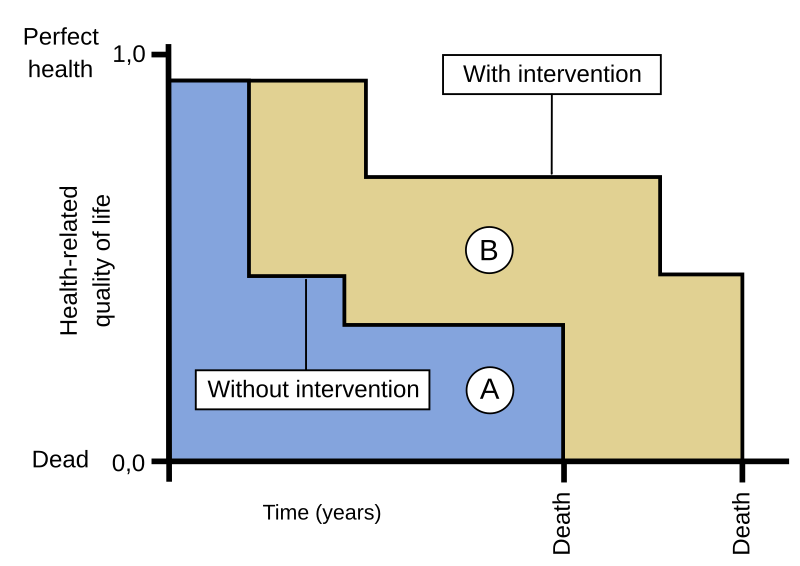
    Measure of total disease burden combining:
    • Years of life lost (YLL)
    • Years lived with disability (YLD)
  • Formula
    DALY = YLL + YLD
  • Example
    • Early death + years lived with illness → total burden
  • Importance
    • Composite indicator
    • Used in Global Burden of Disease studies

HALE (Health Adjusted Life Expectancy)

  • Definition
    Average number of years a person is expected to live in full health
  • Key Point
    • Adjusts life expectancy by quality of health

Nutritional Status Indicators
 

https://nutritionalassessment.org/bodysize/figures/fig10.28a.jpg


https://www.researchgate.net/publication/319055703/figure/fig2/AS%3A666709325258753%401535967298481/Signs-of-kwashiorkor-drawing-by-Hallgeir-Kismul.png


https://www.researchgate.net/publication/11382679/figure/tbl2/AS%3A601660342677537%401520458412533/Biochemical-Markers-for-Identifying-Iron-Deficiency.png

4


Anthropometry

  • Measurement of body dimensions
  • Examples
    • Weight
    • Height
    • BMI
    • MUAC

Clinical Signs

  • Visible signs of deficiency
  • Examples
    • Pallor → anemia
    • Edema → protein deficiency

Biochemical Tests

  • Laboratory investigations
  • Examples
    • Hemoglobin
    • Serum proteins
    • Vitamin levels

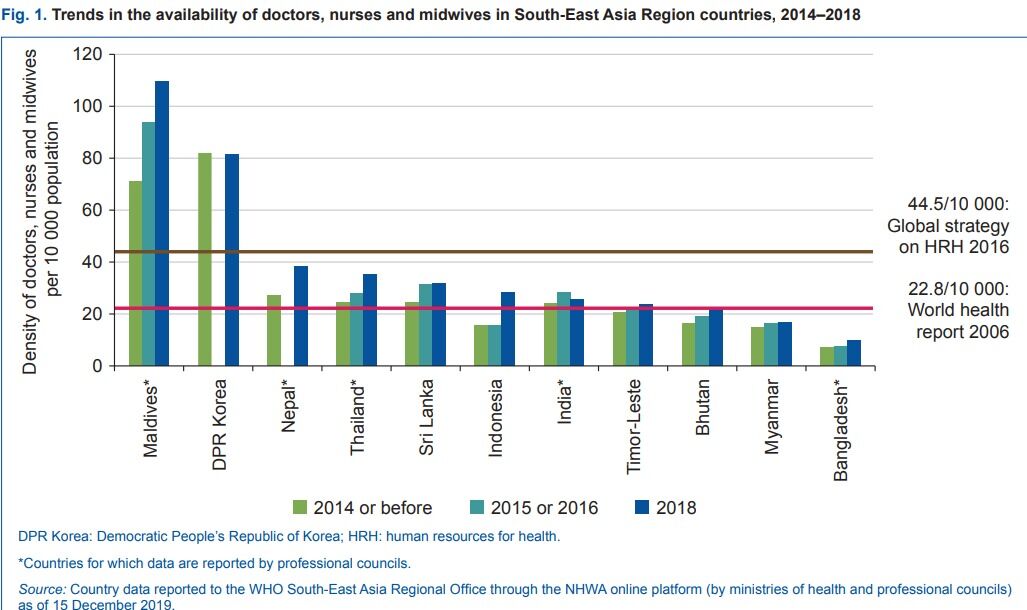
Health Care Delivery Indicators
 

https://www.factchecker.in/h-upload/2022/08/03/765765-who-ratio.jpg


https://www.researchgate.net/publication/366282477/figure/fig2/AS%3A11431281107494551%401671074244947/Causal-loop-diagram-of-hospital-beds-distribution.png


https://cdn.teachoo.com/e1b48ac0-978c-4ba2-a2e1-af6e99b857ba/indicators-of-health-and-health-infrastructure-in-india---teachoo.jpg

4


Doctor–Population Ratio

  • Number of doctors per population
  • Reflects availability of medical care

Bed–Population Ratio

  • Number of hospital beds per population
  • Indicates health infrastructure

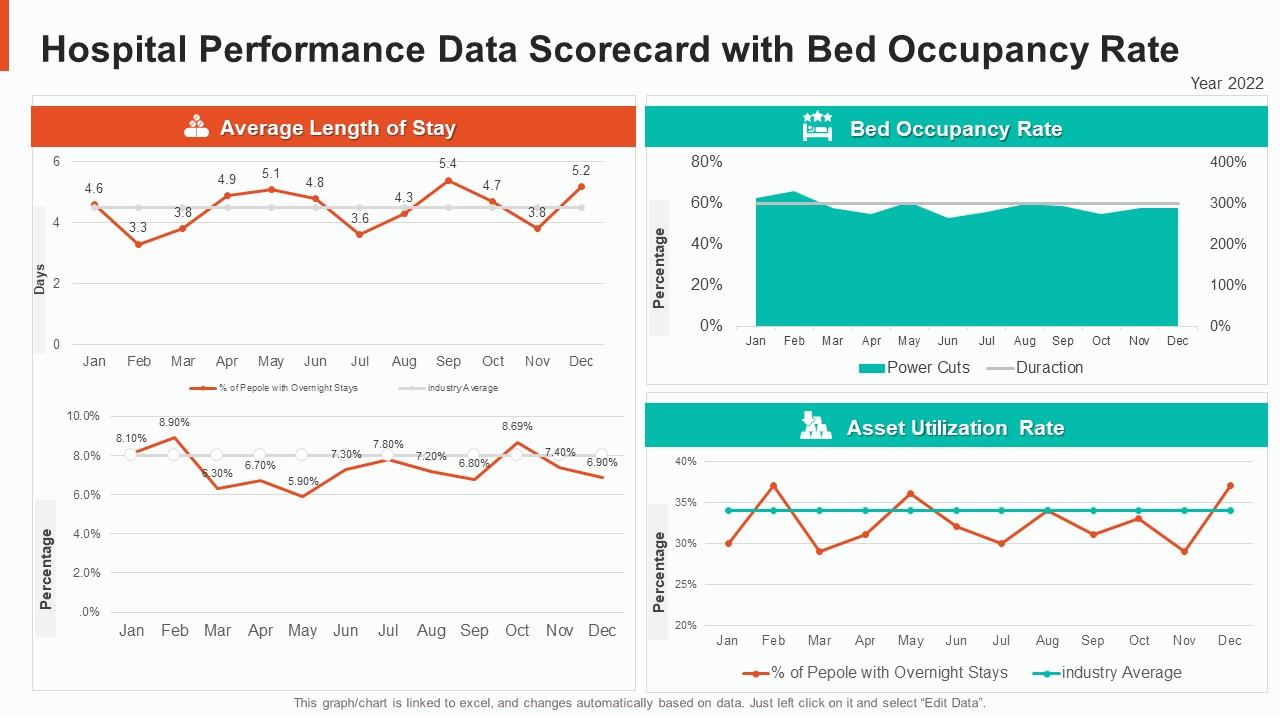
Utilization Rates
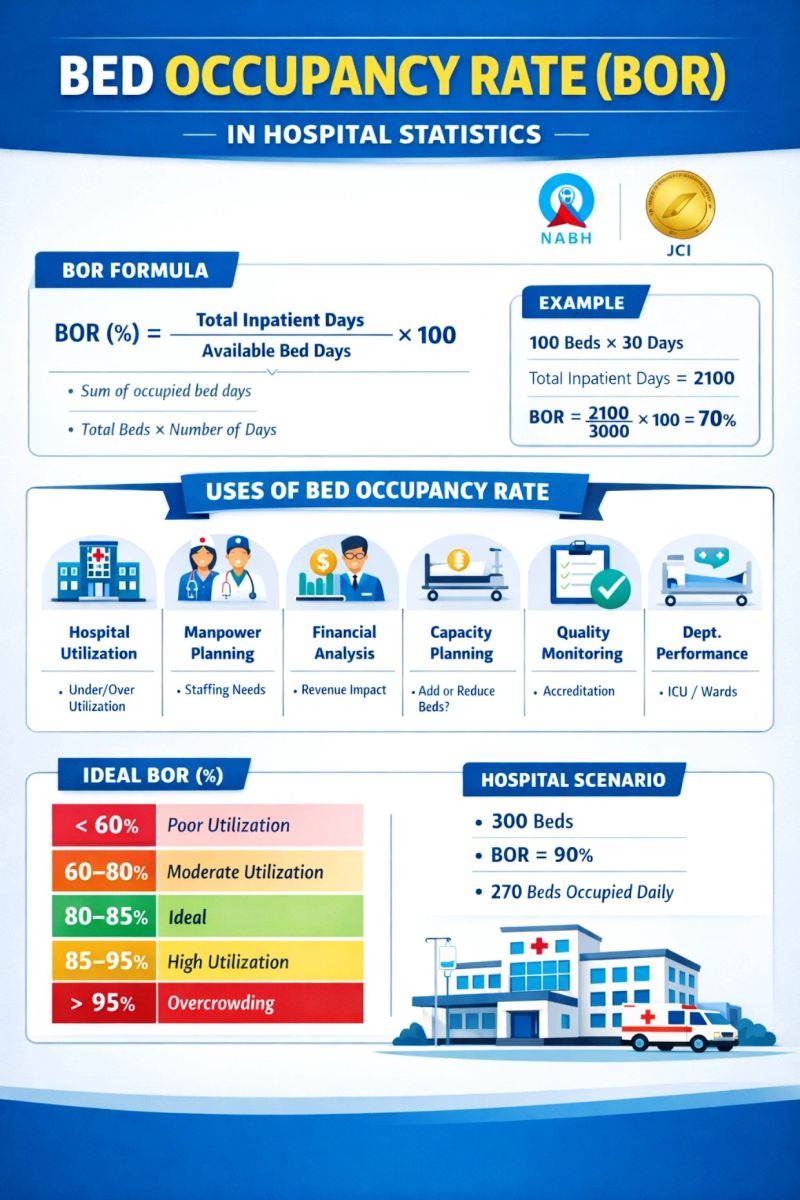
 

https://media.licdn.com/dms/image/v2/D5622AQFOJ9cAAI8-DA/feedshare-shrink_800/B56ZxhWOLSJAAg-/0/1771159741392?e=2147483647&t=5ttxdDEVvUEwrW9-W7qvMu15GOCmAUSUWBNoddkPu1M&v=beta


https://www.researchgate.net/publication/51717135/figure/fig3/AS%3A202588126486536%401425312181261/Service-utilization-pre-and-post-intervention-This-bar-graph-shows-the-number-of.png


https://www.slideteam.net/media/catalog/product/cache/1280x720/h/o/hospital_performance_data_scorecard_with_bed_occupancy_rate_slide01.jpg

4


OPD Attendance

  • Number of outpatient visits
  • Reflects health service usage

Hospital Admission Rate

  • Number of hospital admissions
  • Indicates:
    • Disease burden
    • Accessibility of services

Social & Mental Health Indicators


https://images.openai.com/static-rsc-3/dPpQCIvW-gC5RMyrI2UzJI6Cl3u3yzA5q5rV0OTunWyzTXCTXh4s7891wZPJIBJ_9j_3d1jC0_C8nvC7KdTC53Fm8ZkbGy-nch2PeDKan6k?purpose=fullsize&v=1


https://media.springernature.com/full/springer-static/image/art%3A10.1038%2Fs41562-019-0810-4/MediaObjects/41562_2019_810_Fig1_HTML.png


https://images.openai.com/static-rsc-3/Ap3Rq7k0hkI6fgsH9FnaEXlCKqRaKU5w4Qt6UdPt-kLT6t8GbLBHpqxnXo4mMrSRNpUmms_gP6jZq4Oi-wi4VD4ZREaApr1WqQwZjI5jyNQ?purpose=fullsize&v=1

4


Suicide Rate ⭐

  • Reflects mental health status

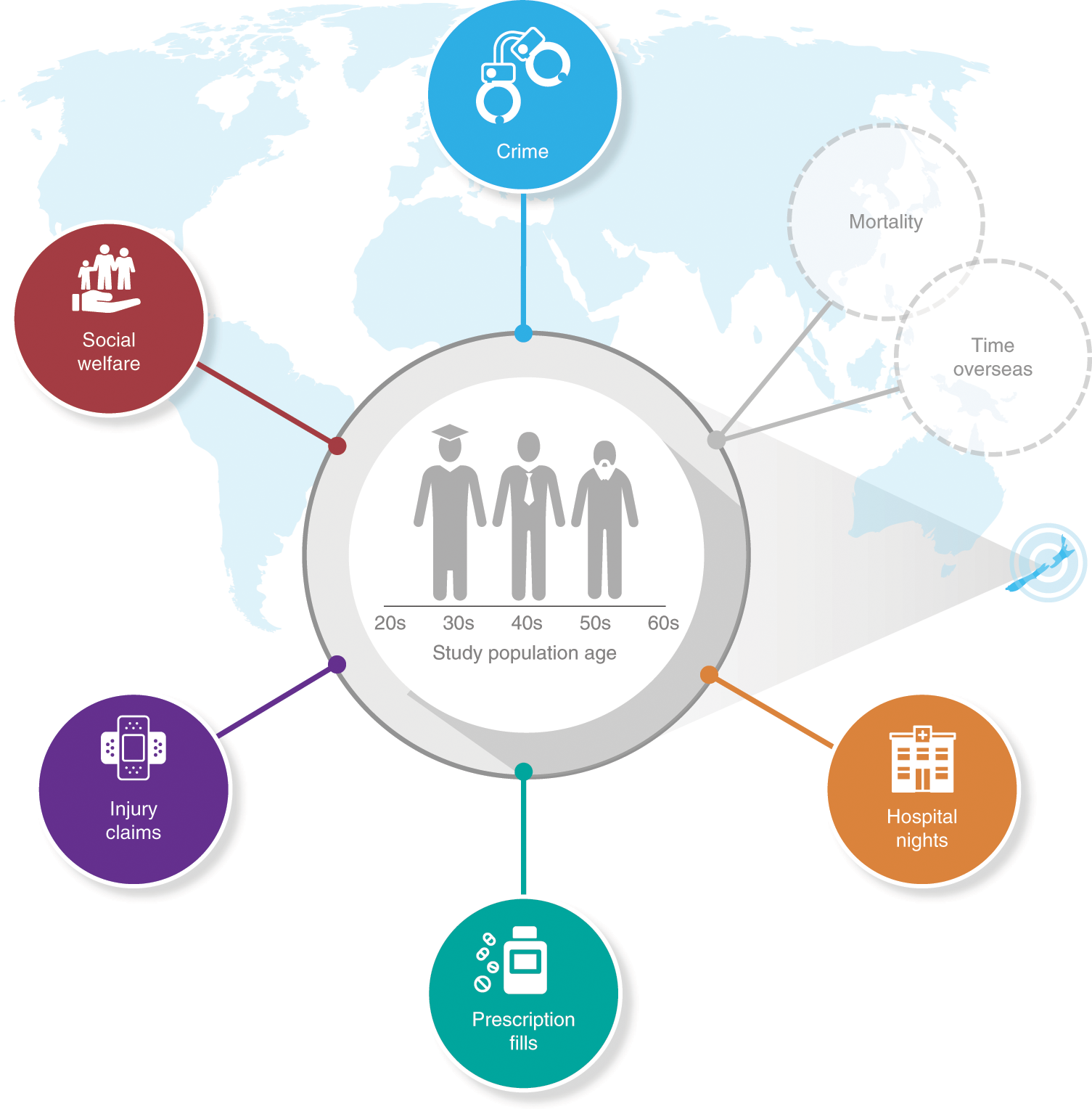
Crime Rate

  • Indicates:
    • Social instability
    • Psychosocial stress

Environmental Indicators


https://images.openai.com/static-rsc-3/2fndKnNGebAIGlQ708GU0gOsZqCu3jAUQcOaZpwfnQLEdfhkyo8-CspMQC1eWEE--YxQPOuEsydvYem_bJHTfkaEcHdCRpuGieiG6Sc53xM?purpose=fullsize&v=1


https://www.researchgate.net/publication/301887683/figure/fig2/AS%3A614045191241737%401523411190590/Protecting-public-health-through-ensuring-drinking-water-quality-Davison-et-al-2002.png


https://images.openai.com/static-rsc-3/01FqxEL-aZMXcaJM0liPbYc2Pf1uxnqox_61655m_-6QxYjzvOM06TFLeffOLwAGUrNulEXRROH8b_GdBmtSOQnrNVFMX-17_BI0AuR9RbA?purpose=fullsize&v=1

4


Air Quality

  • Measured by AQI
  • Linked to respiratory diseases

Water Quality

  • Safe drinking water availability
  • Prevents infections

Sanitation

  • Toilet facilities, waste disposal
  • Prevents communicable diseases

Socioeconomic Indicators


https://fastercapital.com/i/Literacy-rate--Unlocking-the-Importance-of-Literacy-Rates-in-HDI--National-and-International-Initiatives.webp


https://www.researchgate.net/publication/328345799/figure/fig1/AS%3A11431281271996229%401723837740378/Relation-between-income-per-capita-and-indicators-of-population-health-a-LogGDP-vs-Life.tif


https://hdr.undp.org/sites/default/files/styles/original/public/images/2022-03/hdiRoadMap.png?itok=_Q5mwWs0

4


Literacy Rate ⭐

  • Reflects:
    • Education level
    • Health awareness

Per Capita Income

  • Indicates:
    • Economic status
    • Living standards

EXTRA HIGH-YIELD INDICATORS


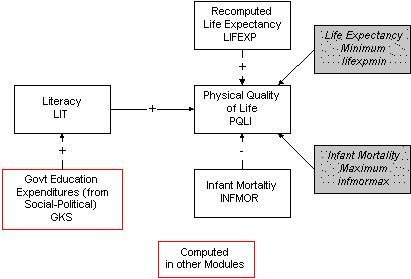
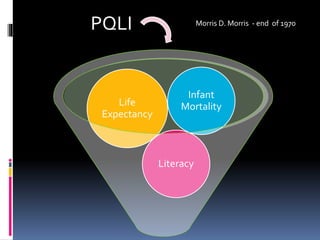
PQLI (Physical Quality of Life Index)
 

https://image.slidesharecdn.com/wcelavldrzqfxmgo4h2i-signature-6562962585d737fe271922b83d1a6987f8ef7352bd9b0c2ba1ffa0fdb5db2954-poli-151210035820/85/Indicators-of-Development-7-320.jpg


https://www.mdpi.com/mathematics/mathematics-10-02091/article_deploy/html/images/mathematics-10-02091-g001.png


https://www.ifs.du.edu/assets/help/images/img00088.gif

4

  • Components
    • Infant Mortality Rate
    • Life expectancy at age 1
    • Literacy rate
  • Scale
    • 0 to 100
  • Importance
    • Measures quality of life independent of income

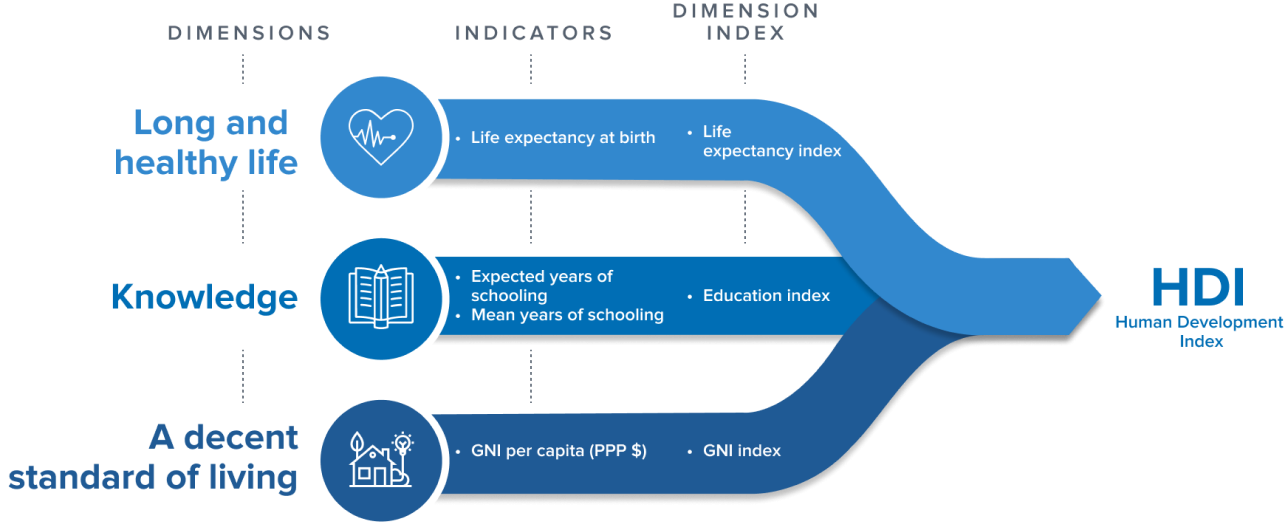
HDI (Human Development Index) ⭐


https://images.openai.com/static-rsc-3/33UOH_2dJHKo7GN-OmolTiIT22IJrxbpFMg9aS9pTSrfno_HfbIR5HPLZZj_-YAVhtwDeuI5F3BAXwjzvX8_jxffV3_9K6zgTeoYlhvja3Q?purpose=fullsize&v=1


https://images.openai.com/static-rsc-3/f4t3qEwKXh5pmpx7SXDbvGs1hxdVYcC_zXqmVFcPwT4ZifF-QSNJX2c26rHl0tvfdLDt11t-R3BJS44ZDBTCa2wtKerkzN5I_QIEkOjT16Q?purpose=fullsize&v=1


https://www.researchgate.net/publication/353670918/figure/fig2/AS%3A1052871386746880%401628035508828/Difference-among-five-countries-Human-Development-Index-HDI.png

4

  • Components
    • Life expectancy
    • Education
    • Per capita income
  • Range
    • 0 to 1
  • Importance
    • Measures overall development of a country

FINAL ULTRA REVISION (EXAM GOLD)

  • DALY → Burden of disease (YLL + YLD)
  • HALE → Healthy life expectancy
  • IMR → Most sensitive indicator
  • Life expectancy → Best development indicator
  • HDI → Most used global index
  • PQLI → Quality of life (IMR + literacy + life expectancy)


CONCEPT OF DISEASE (PSM – Exam-Oriented Notes)


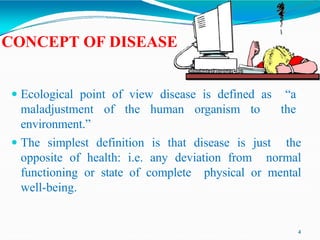
Definition of Disease
 

https://image.slidesharecdn.com/spectrumofhealth-210827094552/85/Spectrum-of-health-4-320.jpg


https://www.researchgate.net/publication/378995971/figure/fig1/AS%3A11431281254761529%401719313643565/Common-features-of-the-pathogenesis-of-autoimmune-disorders-The-pathogenesis-of.tif


https://image.slidesharecdn.com/2-200826053403/85/Concept-of-Disease-4-320.jpg

4

Standard Definition

  • Disease is a maladjustment of the human organism to the environment, resulting in functional or structural disturbances

Disease vs Illness vs Sickness (VERY IMPORTANT)


https://figures.semanticscholar.org/a28cc5679df7712142320c432d3f3a2d2496ad7e/5-Figure2.1-1.png


https://www.researchgate.net/publication/338011470/figure/fig4/AS%3A978757301051392%401610365333965/Summary-of-the-illness-perceptions-from-the-Common-Sense-Model-of-Illness-Abbreviation.png


https://www.researchgate.net/publication/355579099/figure/fig2/AS%3A11431281127295753%401678990423605/The-many-features-of-inflammation-induced-sickness-behavior-Inflammation-induced.ppm

4


Disease

  • Definition → Objective pathological condition
  • Nature → Measurable and identifiable
  • Example → Tuberculosis, diabetes

Illness

  • Definition → Subjective feeling of being unwell
  • Nature → Patient’s perception
  • Example → Fatigue, pain

Sickness

  • Definition → Social role of being ill
  • Nature → Society’s recognition of illness
  • Example → Leave from work, social support

Exam Line

  • Disease = objective, Illness = subjective, Sickness = social concept

Additional Concepts


Latent Disease


https://www.researchgate.net/publication/346194172/figure/fig2/AS%3A961572226744321%401606268092508/Key-time-periods-of-COVID-19-infection-the-latent-or-exposed-period-before-the-onset-of.png


https://d1j63owfs0b5j3.cloudfront.net/term/images/stages-of-infectious-disease-2481.png


https://www.researchgate.net/publication/304614221/figure/fig2/AS%3A411371008217088%401475089899340/Conceptual-framework-of-the-study-Various-risk-factors-for-latent-tuberculosis-were.png

4

  • Definition → Disease present but not yet manifest clinically
  • Examples
    • Latent TB
    • Incubation period of infections

Subclinical Disease


https://www.researchgate.net/publication/285595051/figure/fig4/AS%3A303163610550308%401449291245840/Conceptual-diagrams-of-different-tuberculosis-TB-diagnostic-models-a-The-standard.png


https://media.springernature.com/full/springer-static/image/art%3A10.1038%2Fs41577-021-00631-x/MediaObjects/41577_2021_631_Fig1_HTML.png


https://www.researchgate.net/publication/389905322/figure/fig1/AS%3A11431281316602534%401742215774851/Schematic-illustrating-the-concept-of-single-cancer-early-detection-SCEDbased-on-one.png

4

  • Definition → Disease without recognizable symptoms, but detectable by tests
  • Examples
    • Hypertension
    • Early diabetes

ICEBERG PHENOMENON OF DISEASE ⭐


Concept
 

https://cdn.slidesharecdn.com/ss_thumbnails/icebergconceptofdiseaseoccurrence-170904023249-thumbnail.jpg?fit=bounds&height=640&width=640


https://image.slidesharecdn.com/icebergconceptofdiseaseoccurrence-170904023249/85/Iceberg-concept-of-disease-occurrence-3-320.jpg


https://www.researchgate.net/publication/237047603/figure/fig2/AS%3A299478964817922%401448412757777/Burden-of-infectious-disease-in-society-the-iceberg.png

4

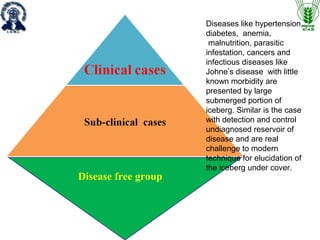
  • Only a small proportion of cases are clinically visible
  • Majority remain hidden (subclinical or undiagnosed)

Components


Tip of Iceberg (Visible Part)

  • Clinical cases
  • Diagnosed cases
  • Hospitalized patients

Submerged Part (Hidden)

  • Subclinical cases
  • Undiagnosed cases
  • Carriers

Diagram Explanation (VERY IMPORTANT FOR EXAM)

  • Upper small portion → clinical cases
  • Larger submerged portion →
    • Subclinical
    • Carriers
    • Mild/undiagnosed cases
  • Exam Tip
    • Always draw a simple iceberg diagram with labeling

Implications


Screening Importance ⭐

  • Detect hidden cases
  • Early diagnosis
  • Prevent complications

Public Health Relevance

  • True burden of disease is much larger than visible cases
  • Important for:
    • Planning health services
    • Disease control programs

Examples

  • Hypertension
  • Diabetes
  • Tuberculosis

FINAL EXAM SUMMARY (HIGH-YIELD)

  • Disease = objective, Illness = subjective, Sickness = social
  • Latent → present but not expressed
  • Subclinical → no symptoms but detectable
  • Iceberg → hidden cases > visible cases
  • Screening → key to detect submerged cases


NATURAL HISTORY OF DISEASE ⭐ (PSM – Exam-Oriented Notes)


Definition
 

https://image.slidesharecdn.com/newnaturalhistory-170613045121/85/Natural-History-of-Disease-Levels-of-prevention-5-320.jpg


https://archive.cdc.gov/www_cdc_gov/csels/dsepd/ss1978/lesson1/section9_html_files/Figure1.18.jpg


https://www.researchgate.net/publication/50362777/figure/fig1/AS%3A203161252962305%401425448825613/The-epidemiological-triad-Interaction-of-host-environment-and-pathogen-determine.png

4

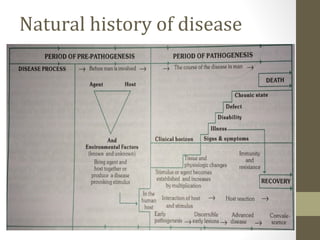
  • Natural history of disease =
    Progression of a disease from its origin to outcome in the absence of intervention

PHASES OVERVIEW


1. Pre-Pathogenesis Phase


https://www.researchgate.net/publication/50362777/figure/fig1/AS%3A203161252962305%401425448825613/The-epidemiological-triad-Interaction-of-host-environment-and-pathogen-determine.png


https://www.researchgate.net/publication/387461954/figure/fig1/AS%3A11431281801243042%401766141960237/Schematic-diagram-of-preeclampsia-pathogenesis-Genetic-factors-environmental-factors.jpg


https://media.springernature.com/full/springer-static/image/art%3A10.1038%2Fs44259-025-00113-3/MediaObjects/44259_2025_113_Fig1_HTML.png

4

  • Disease has not yet started in host

Agent–Host–Environment Interaction

  • Agent → bacteria, virus, toxin
  • Host → age, immunity, genetics
  • Environment → climate, sanitation

Risk Factors

  • Smoking
  • Poor nutrition
  • Unsafe water
  • Genetic predisposition

Exam Line

  • Stage of disease causation without clinical disease

2. Pathogenesis Phase


A. Subclinical Stage


https://archive.cdc.gov/www_cdc_gov/csels/dsepd/ss1978/lesson1/section9_html_files/Figure1.18.jpg


https://image.slidesharecdn.com/2-151008182728-lva1-app6892/85/Aims-Objective-Concept-of-Screening-3-320.jpg


https://images.openai.com/static-rsc-3/raMKFFtWmfitXpXwTrRvYfDtKcW-Def_CvdxuiQGNrBQ0eaSurGiY2N30dnlfIi6M1ilPnRm-kfrlue0wN8Z8x-RtLctd9PxDuf3GBUOmEU?purpose=fullsize&v=1

4

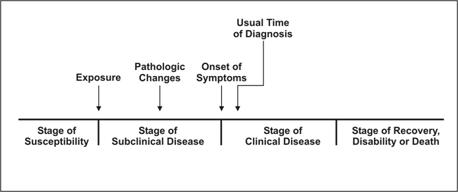
  • Disease has started but no symptoms

Incubation / Latent Period

  • Time between:
    • Exposure to agent
    • Appearance of symptoms

Screening Importance ⭐

  • Detect disease early
  • Prevent progression
  • Example:
    • BP screening
    • Blood sugar testing

Exam Line

  • Best stage for secondary prevention

B. Clinical Stage


https://my.clevelandclinic.org/-/scassets/images/org/health/articles/15096-chronic-kidney-disease


https://www.researchgate.net/publication/342067288/figure/fig1/AS%3A900771935698947%401591772173771/Phases-clinical-progression-management-and-available-therapies-of-COVID-19-ARDS-acute.png


https://movementdisorders.onlinelibrary.wiley.com/cms/asset/26ec911d-06f5-47f2-90d8-1e86e97c7467/mds29859-toc-0001-m.jpg

4

  • Disease becomes symptomatic

Features

  • Signs → objective
  • Symptoms → subjective

Stages

  • Early disease
  • Advanced disease

Exam Line

  • Stage where treatment is usually initiated

3. Outcome


https://www.researchgate.net/publication/349059965/figure/fig2/AS%3A11431281187338622%401694194020611/Flowchart-of-clinical-recovery-and-main-outcomes-during-the-rehabilitation-process-The.tif


https://www.who.int/images/default-source/health-topics/rehabilitation/rehab-in-emergencies-infographic.tmb-549v.jpg?Culture=en&sfvrsn=cb886813_6


https://med.iiab.me/modules/en-cdc/www.cdc.gov/vitalsigns/disabilities/images/infographic_970px.jpg

4


Possible Outcomes

  • Recovery
    • Complete or partial
  • Disability
    • Temporary or permanent
  • Death

FLOWCHART (VERY IMPORTANT FOR EXAM)


Pre-Pathogenesis Phase

Exposure to Risk Factors

Pathogenesis Phase
↓ ↓
Subclinical Clinical Stage
(Incubation) (Symptoms)

Outcome
(Recovery / Disability / Death)


LEVELS OF PREVENTION CORRELATION (VERY IMPORTANT)


https://images.openai.com/static-rsc-3/sm93y_0dOlHgywv4X0rBfRaWI_SIDCpffbNvYW-Oy7uVaWy7usY2X7TeNZHTlQdKT2whQsJRQ2X41JZn7Nr3i8bCK-r0MeY_Up3KX3R05Q0?purpose=fullsize&v=1


https://pressbooks.uwf.edu/app/uploads/sites/26/2023/10/75d9664bada207113df59f5467a076cb179f4c06-1-300x184.png


https://i.pinimg.com/1200x/f0/e6/65/f0e665d98a2323da18c88bac166e4e4e.jpg

4


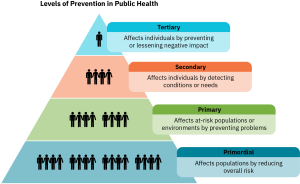
Primary Prevention

  • Acts in Pre-pathogenesis phase
  • Prevent disease occurrence

Examples

  • Immunization
  • Health education

Secondary Prevention

  • Acts in Subclinical stage
  • Early detection & treatment

Examples

  • Screening programs
  • Early diagnosis

Tertiary Prevention

  • Acts in Clinical stage & outcome
  • Limit disability

Examples

  • Rehabilitation
  • Physiotherapy

FINAL EXAM SUMMARY (SUPER HIGH-YIELD)

  • Natural history = course of disease without intervention
  • Pre-pathogenesis → risk factors
  • Subclinical → no symptoms + screening stage
  • Clinical → symptoms present
  • Outcome → recovery / disability / death
  • Prevention:
    • Primary → before disease
    • Secondary → early detection
    • Tertiary → rehabilitation


EPIDEMIOLOGICAL TRIAD ⭐ (PSM – Exam-Oriented Notes)


Definition / Concept
 

https://med.libretexts.org/%40api/deki/files/67437/3964851014d45ddbd447df8d6d79f7d2c7f42af6?height=347&revision=1&size=bestfit&width=379


https://cf.son.umaryland.edu/NURS467/pic/epidemiological_triangle.png


https://www.researchgate.net/publication/50362777/figure/fig1/AS%3A203161252962305%401425448825613/The-epidemiological-triad-Interaction-of-host-environment-and-pathogen-determine.png

4

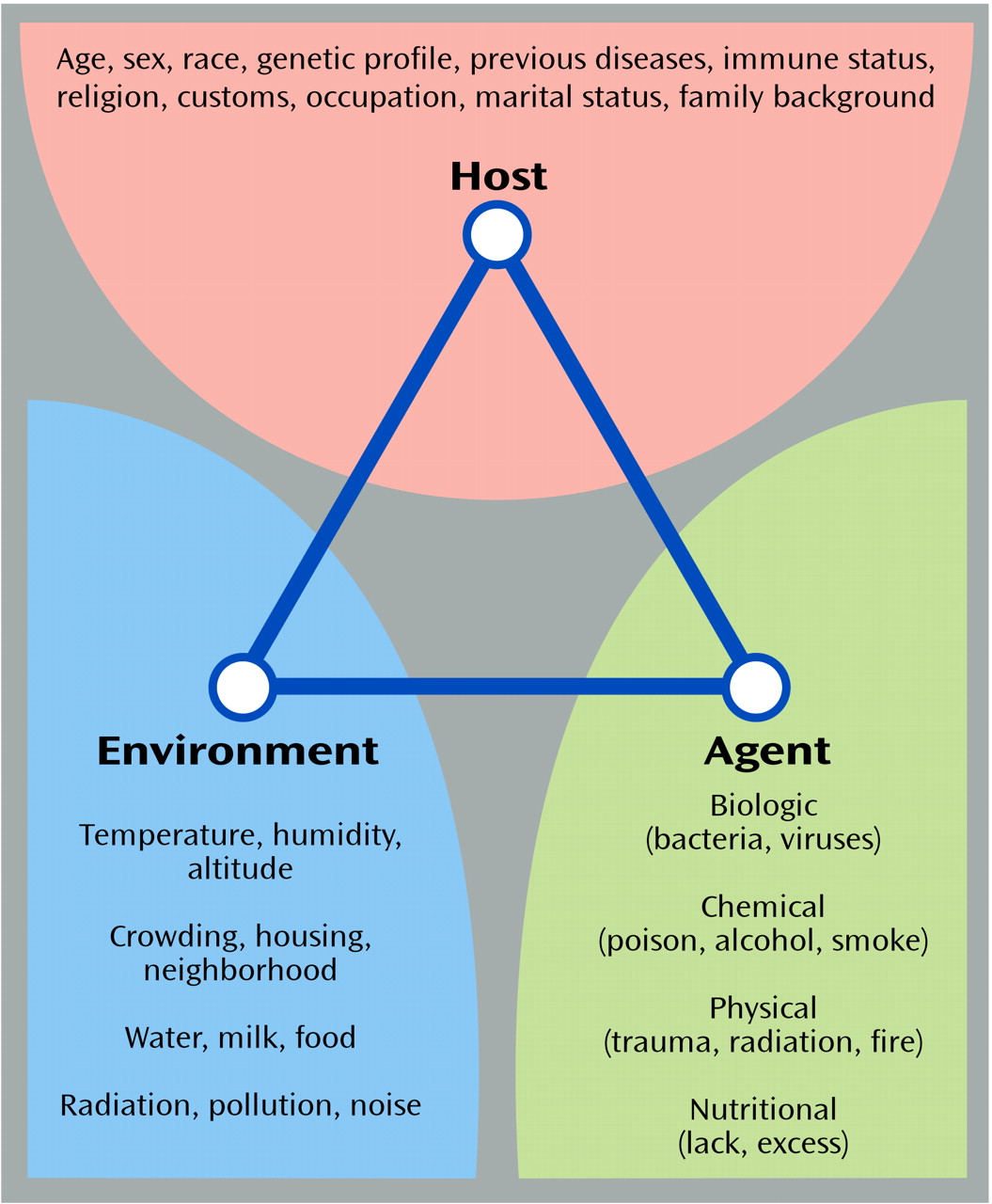
  • Disease occurs due to interaction of three components:
    • Agent
    • Host
    • Environment
  • Exam Line
    • Disease is the result of imbalance among agent, host, and environment

COMPONENTS OF TRIAD


1. Agent
 

https://www.mdpi.com/applsci/applsci-15-10421/article_deploy/html/images/applsci-15-10421-g003-550.jpg


https://images.openai.com/static-rsc-3/dv40wGuoksyva0yEVyFAdnbTmoL4f6gV19Wit4JxOcT1ZZnjaMFqf5XZiZsIhhVWoYZOYTPfLqiE41RLCHmsQnBuwt2biTHKfENNUSX3Ums?purpose=fullsize&v=1


https://media.springernature.com/m685/springer-static/image/art%3A10.1038%2Fs41570-021-00275-4/MediaObjects/41570_2021_275_Figa_HTML.png

4

  • Factor whose presence or absence causes disease

Types of Agents

  • Biological
    • Bacteria, viruses, parasites
    • Example → TB (Mycobacterium)
  • Chemical
    • Toxins, pollutants
    • Example → Lead poisoning
  • Physical
    • Heat, cold, radiation
    • Example → Burns
  • Mechanical
    • Injury, trauma
    • Example → Road traffic accidents

2. Host


https://cf.son.umaryland.edu/NURS467/pic/epidemiological_triangle.png


https://www.cell.com/cms/10.1016/j.immuni.2024.03.007/asset/f51abccf-5d00-491d-a621-5e396734e7f5/main.assets/gr3_lrg.jpg


https://www.mdpi.com/biomedicines/biomedicines-09-00652/article_deploy/html/images/biomedicines-09-00652-g001.png

4

  • Person who harbors the disease

Host Factors

  • Age
    • Children → infections
    • Elderly → chronic diseases
  • Sex
    • Females → anemia
    • Males → accidents
  • Immunity
    • Strong immunity → protection
    • Weak immunity → susceptibility
  • Genetics
    • Determines disease risk

3. Environment


https://images.openai.com/static-rsc-3/2Y9D6xCgy_GARgSezt6B5yo561fQTNIgeiI32XeRJ-5WjZBf2l-cK6KFWAXlVUsjTcI_s27AfQfNfhtsiJdhxSD70oUPNk-geH_YBs1Xkmw?purpose=fullsize&v=1


https://images.openai.com/static-rsc-3/iw3HzHCE7AXoSaDWfcpcwUxf31hDfsesRHr-Z4X8LwBnougo0Fve7DrYNSHuUb6O7RW8H44_PdLWs_3Ewrkg7IolI6rOr0jUV7nUCQPU4Ek?purpose=fullsize&v=1


https://www.researchgate.net/publication/273785712/figure/fig1/AS%3A272550840238140%401441992592728/Sociocultural-Health-Behavior-Model-Sociocultural-Health-Behavior-Model-developed-by.png

4

  • External factors affecting agent and host interaction

Types of Environment

  • Physical
    • Climate, water, housing
  • Biological
    • Vectors, microorganisms
  • Social
    • Culture, customs, socioeconomic status

APPLICATION IN DISEASE CAUSATION ⭐


Concept

  • Disease develops when:
    • Agent is present
    • Host is susceptible
    • Environment is favorable

Examples


1. Tuberculosis

  • Agent → Mycobacterium tuberculosis
  • Host → Malnourished individual
  • Environment → Overcrowding

2. Malaria

  • Agent → Plasmodium
  • Host → Non-immune individual
  • Environment → Mosquito breeding areas

3. Road Traffic Accident

  • Agent → Mechanical force
  • Host → Driver
  • Environment → Poor road conditions

Public Health Importance

  • Helps in:
    • Understanding disease causation
    • Planning prevention strategies
    • Identifying risk factors

Exam Line (VERY IMPORTANT)

  • Control of disease can be achieved by:
    • Eliminating agent
    • Protecting host
    • Modifying environment

FINAL EXAM SUMMARY (ULTRA HIGH-YIELD)

  • Triad → Agent + Host + Environment
  • Agent types → biological, chemical, physical, mechanical
  • Host → age, sex, immunity, genetics
  • Environment → physical, biological, social
  • Disease = interaction of all three


MULTIFACTORIAL CAUSATION OF DISEASE ⭐ (PSM Notes)


Concept


https://journals.sagepub.com/cms/10.3233/JAD-230396/asset/ed9784df-0b52-41e7-803e-2a13a4a75176/assets/graphic/10.3233_jad-230396-fig1.jpg


https://www.researchgate.net/publication/379359797/figure/fig1/AS%3A11431281232252039%401711643343808/Trends-and-patterns-of-non-communicable-disease-risk-factors-This-figure-is-self-created.png


https://www.researchgate.net/publication/237421153/figure/fig1/AS%3A340527653376004%401458199527629/Causal-Pathway-from-Driving-Forces-through-Exposures-to-Health-Outcomes-in-the-Context.png

4

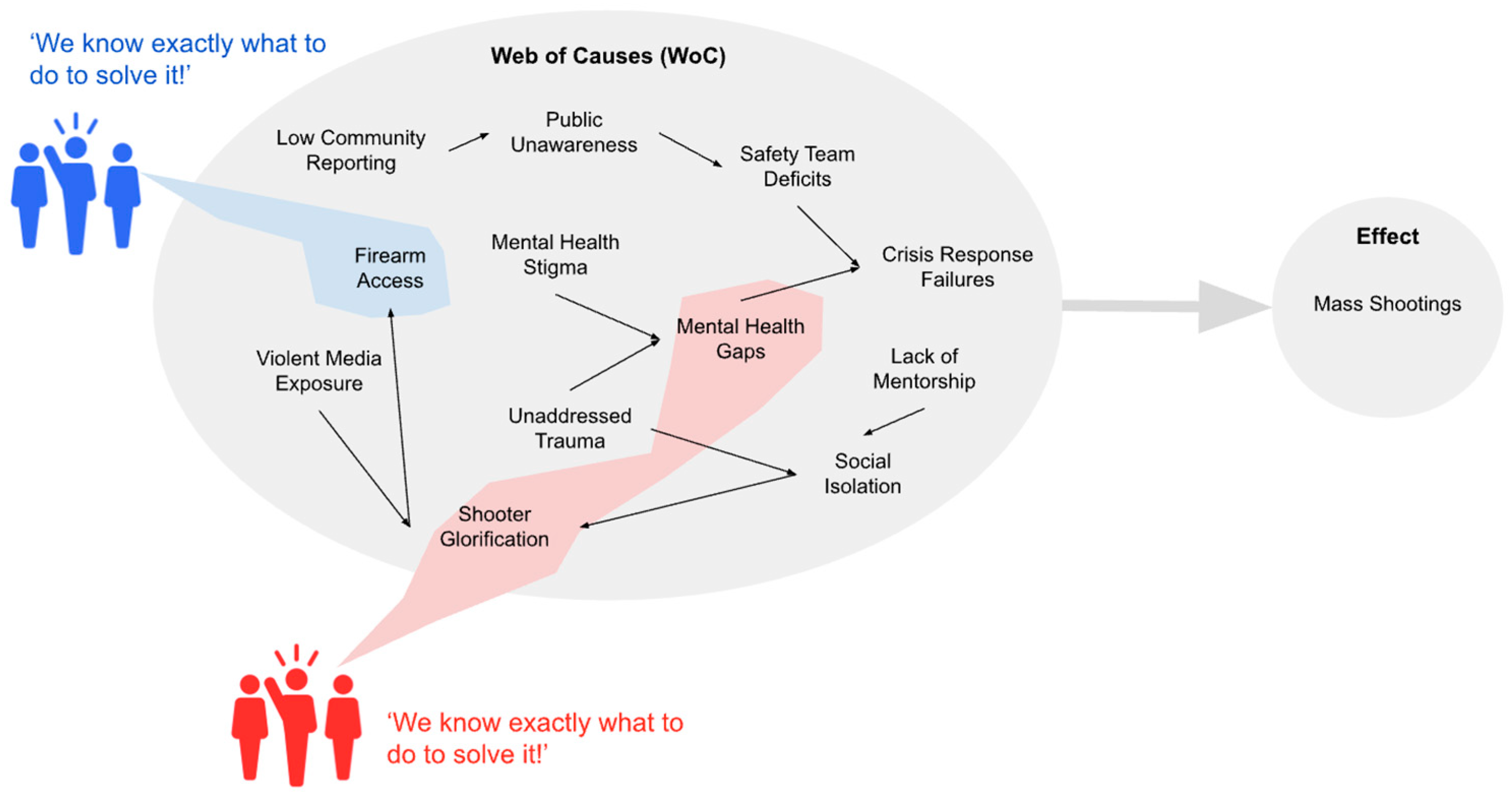
  • Most diseases are caused by multiple interacting factors, not a single cause
  • Especially important in:
    • Chronic diseases
    • Non-communicable diseases

Web of Causation


Definition

  • A model that explains disease as a complex interaction of multiple factors interconnected like a web

Diagram Explanation ⭐
 

https://www.mdpi.com/systems/systems-13-00510/article_deploy/html/images/systems-13-00510-g004.png


https://images-provider.frontiersin.org/api/ipx/w%3D1200%26f%3Dpng/https%3A//www.frontiersin.org/files/Articles/1253506/fpubh-11-1253506-HTML/image_m/fpubh-11-1253506-g001.jpg


https://www.researchgate.net/publication/259449222/figure/fig1/AS%3A601642508488725%401520454160544/The-complementary-contributions-of-risk-factor-analysis-landscape-epidemiology-and.png

4

  • Central point → Disease
  • Surrounding nodes → Risk factors
  • Lines → Interconnections

Examples

  • Diabetes
    • Genetics
    • Obesity
    • Diet
    • Physical inactivity

Exam Line

  • No single cause → multiple interacting factors produce disease

Risk Factors


Definition

  • Factors that increase the probability of disease occurrence

Types

Modifiable Risk Factors

  • Can be changed
  • Examples:
    • Smoking
    • Diet
    • Physical inactivity

Non-Modifiable Risk Factors

  • Cannot be changed
  • Examples:
    • Age
    • Sex
    • Genetics

Exam Line

  • Prevention mainly targets modifiable risk factors

ADVANCED CONCEPTS (VERY IMPORTANT)


Necessary Cause

  • A factor that must be present for disease to occur
  • Example
    • TB bacillus → tuberculosis

Sufficient Cause

  • A factor or combination of factors that inevitably produces disease
  • Example
    • Combination of multiple risk factors → cancer

Exam Line

  • Most diseases are due to combination of factors (sufficient cause)

SPECTRUM OF DISEASE ⭐


Concept


https://archive.cdc.gov/www_cdc_gov/csels/dsepd/ss1978/lesson1/section9_html_files/Figure1.18.jpg


https://www.researchgate.net/publication/334330822/figure/fig1/AS%3A778848388001792%401562703334177/The-stages-of-disease-continuum.png


https://www.researchgate.net/publication/229050244/figure/fig1/AS%3A361267073175553%401463144190408/The-iceberg-concept-of-disease.png

4

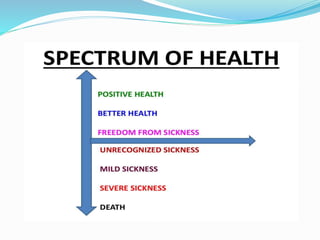
  • Disease is not uniform → it exists in a range (spectrum)
  • Includes:
    • Mild → severe
    • Asymptomatic → fatal

Stages in Spectrum


Subclinical Stage

  • No symptoms
  • Detectable by tests

Clinical Stage

  • Symptoms present

Carrier State

  • Harbors infection without symptoms
  • Can transmit disease

Disability

  • Functional limitation

Death

  • Ultimate outcome

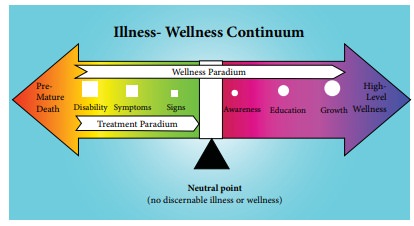
Continuum Model ⭐

  • Health and disease exist on a continuous scale


Health → Subclinical → Clinical → Disability → Death


Exam Line

  • Disease is a continuous process, not a single event

FINAL EXAM SUMMARY (ULTRA HIGH-YIELD)

  • Multifactorial causation → multiple interacting causes
  • Web of causation → network of risk factors
  • Risk factors → modifiable & non-modifiable
  • Necessary cause → must be present
  • Sufficient cause → combination produces disease
  • Spectrum → range from subclinical to death
  • Continuum → health ↔ disease is continuous


MODES OF INTERVENTION (PSM)


Concept


https://image.prepladder.com/prepladder/2024/04/08123517/Levels-of-Prevention.webp


https://www.tandfonline.com/cms/asset/23500e84-7d7e-42f3-af16-4bf256e01ecf/khvi_a_1804776_f0001_oc.jpg


https://images.openai.com/static-rsc-3/dYp14N6nmrO8n9B07jzbDnOgqqyWV7AdIr5e9Qj9VhO3cnKgPGSLXPb7_9y5fj7xeXwvaQJS62G4AwodrHwszped3Eo5kw2nUHylFPEEG1o?purpose=fullsize&v=1

4

  • Measures taken to prevent, control, or treat disease
  • Three main types:
    • Medical
    • Social
    • Environmental

1. Medical Measures


Treatment

  • Diagnosis and management of disease
  • Prevents complications

Examples

  • Antibiotics for infections
  • Surgery

Vaccination

  • Induces immunity
  • Prevents specific diseases

Examples

  • BCG, DPT, COVID vaccine

Exam Line

  • Medical measures focus on individual-level intervention

2. Social Measures


Health Education

  • Improves awareness
  • Promotes healthy behavior

Examples

  • Anti-smoking campaigns
  • Nutrition education

Community Participation

  • Involvement of people in health programs

Examples

  • Swachh Bharat
  • Immunization drives

Exam Line

  • Social measures act through behavior change

3. Environmental Measures


Sanitation

  • Safe water supply
  • Waste disposal

Vector Control

  • Control of disease carriers

Examples

  • Mosquito control (malaria, dengue)

Exam Line

  • Environmental control is key in communicable diseases

CONCEPT OF WELL-BEING


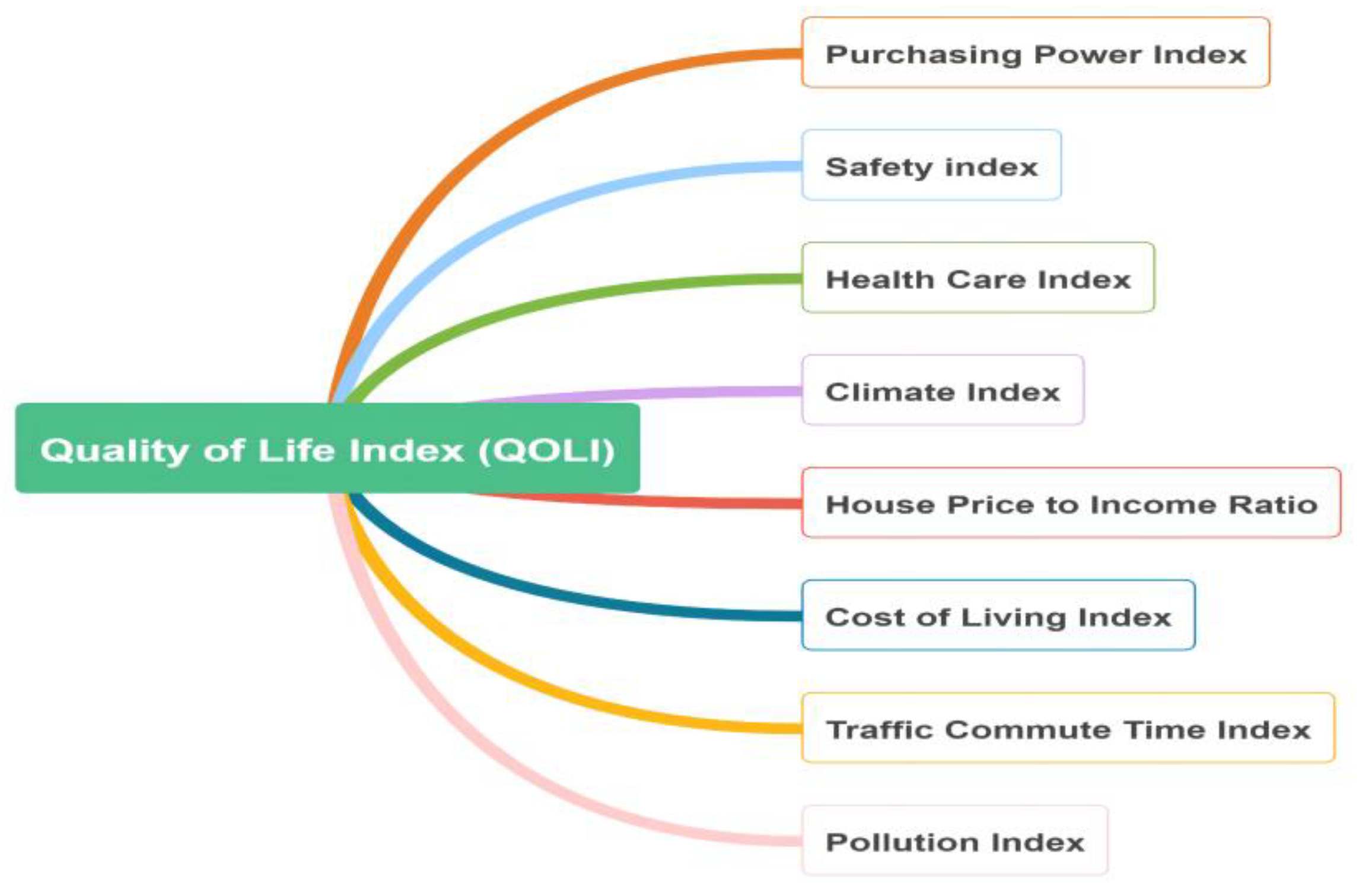
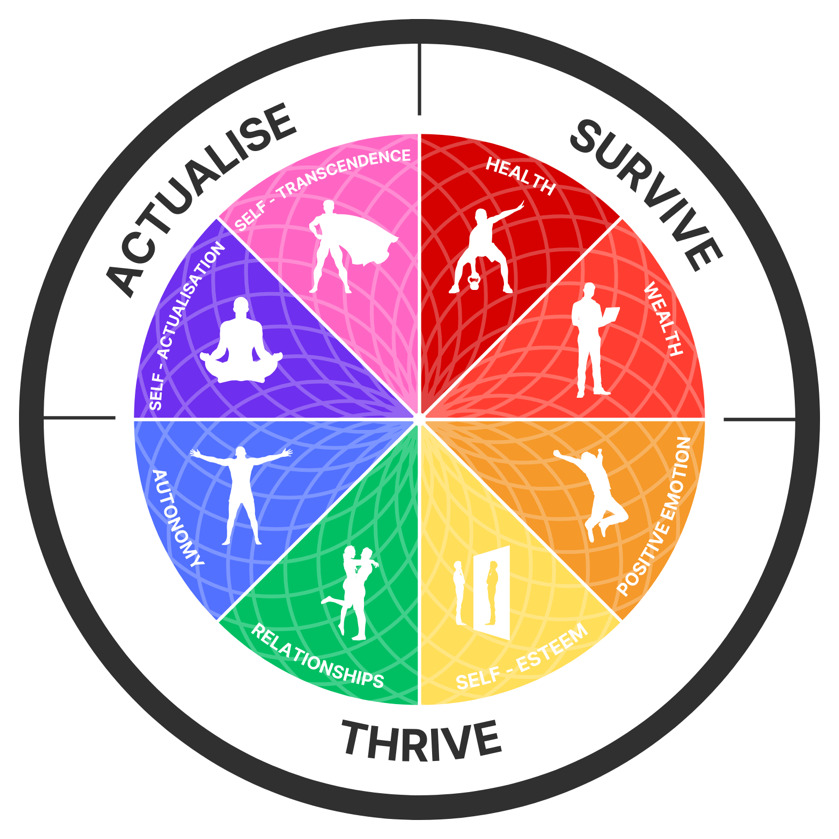
Quality of Life (QOL)
 

https://www.csupueblo.edu/health-education-and-prevention/_doc/the-nine-dimensions-of-wellness.png


https://s3.amazonaws.com/production.scholastica/public/attachments/f3cd27f9-6da5-4c07-97d3-96254c69d0ab/large/figure_8.0._the_flourishing_life_model.png


https://www.happycounts.org/uploads/2/4/4/6/24468989/published/happiness-index-domains.png?1628099442=

4


Definition

  • Degree of satisfaction or happiness experienced by an individual

Indicators

  • Physical health
  • Mental health
  • Social relationships
  • Economic status

Standard of Living (SOL)


https://wallstreetmojo-files.s3.ap-south-1.amazonaws.com/2023/04/Standard-of-Living.png


https://www.researchgate.net/publication/303321662/figure/fig1/AS%3A363205286219778%401463606296831/Dahlgren-and-Whitehead-1991-model-of-the-determinants-of-health.png


https://wir2022.wid.world/www-site/uploads/2021/10/CH1-F1.1-1.jpg

4


Components

  • Income
  • Housing
  • Education
  • Occupation

Difference: QOL vs SOL ⭐

  • Quality of Life
    • Subjective
    • Based on satisfaction
    • Includes mental & social aspects
  • Standard of Living
    • Objective
    • Based on material conditions
    • Income-based

Exam Line

  • QOL is broader; SOL is only a part of QOL

CHANGING CONCEPTS OF HEALTH ⭐


Evolution of Concept
 

https://d45jl3w9libvn.cloudfront.net/jaypee/static/books/9789354654619/Chapters/images/5-1.jpg


https://www.researchgate.net/publication/363499887/figure/fig1/AS%3A11431281084121379%401663039375289/Timeline-of-Healthcare-evolution.ppm


https://ars.els-cdn.com/content/image/1-s2.0-S0074774221001124-f08-01-9780128211755.jpg

4


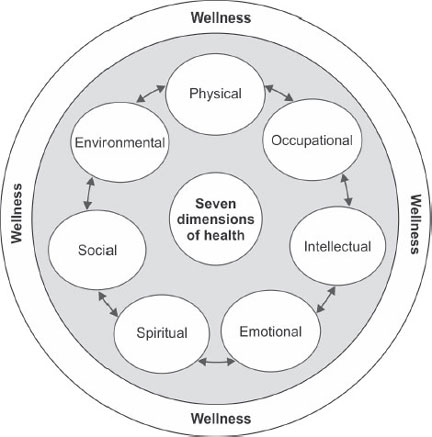
Stages

1. Biomedical Concept

  • Health = absence of disease

2. Ecological Concept

  • Health = balance with environment

3. Psychosocial Concept

  • Role of social + psychological factors

4. Holistic Concept ⭐

  • Integration of all dimensions

Modern Concept of Health

  • Health is:
    • Dynamic
    • Multidimensional
    • Productive

Positive Health

  • State of:
    • Well-being
    • Vitality
    • Productivity

Wellness Concept

  • Dynamic process of:
    • Achieving optimal health
    • Maintaining healthy lifestyle

Exam Line

  • Modern health concept emphasizes positive health and wellness

FINAL ULTRA REVISION (CHAPTER END SUMMARY)

  • Modes of intervention → medical, social, environmental
  • QOL → subjective well-being
  • SOL → material conditions
  • Evolution → biomedical → ecological → psychosocial → holistic
  • Modern concept → positive health + wellness


Ready to study offline?

Get the full PDF version of this chapter.