Mar 21, 2026
PDF Available
Topic Overview


Asteatotic Eczema – Concise Step-by-Step Notes
Definition and Nomenclature
-
Asteatotic eczema is a type of eczema that develops on very dry skin, typically affecting the elderly.
-
Synonyms:
-
Eczéma craquelé
-
Winter eczema
-
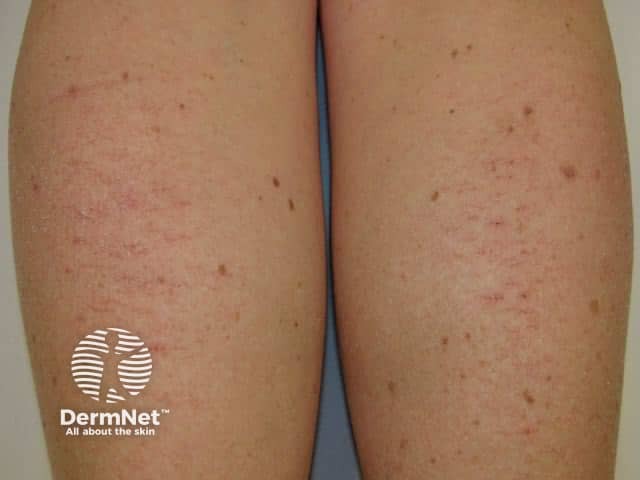
Characterized by a ‘crazy-paving’ pattern on the skin, especially the legs.
Epidemiology
Prevalence
Age
Gender
Ethnicity
Associated Diseases
Pathophysiology
Key Predisposing Factors
-
Naturally dry skin or a lifelong tendency to chapping
-
Age-related reduction in skin lipids due to illness, malnutrition, or hormonal decline
-
Increased transpiration relative to environmental moisture levels
-
Loss of the epidermal water barrier in the stratum corneum
-
Frequent exposure to degreasing agents (cleansers, soaps, solvents)
-
Low environmental humidity, especially in winter months and with central heating
-
Repeated minor skin trauma leading to inflammation and disruption of lipid balance
Medications
Environmental Triggers
-
Cold, dry winds
-
Indoor heating
-
Excessive bathing
Clinical Features
1. Symptoms
-
Intense irritation that worsens with temperature changes, particularly at night
-
Itching and burning sensations
2. Appearance
-
Dry, scaly, cracked skin with a superficial crisscross pattern
-
‘Parchment pulps’ – dry, cracked fingertips that retain indentations after pressure
-
Crazy-paving pattern (Eczéma craquelé) – deep skin fissures, particularly on the legs
-
In severe cases:
3. Distribution
4. Chronic Course
Asteatotic Eczema – Complete Concise Notes
Differential Diagnosis
-
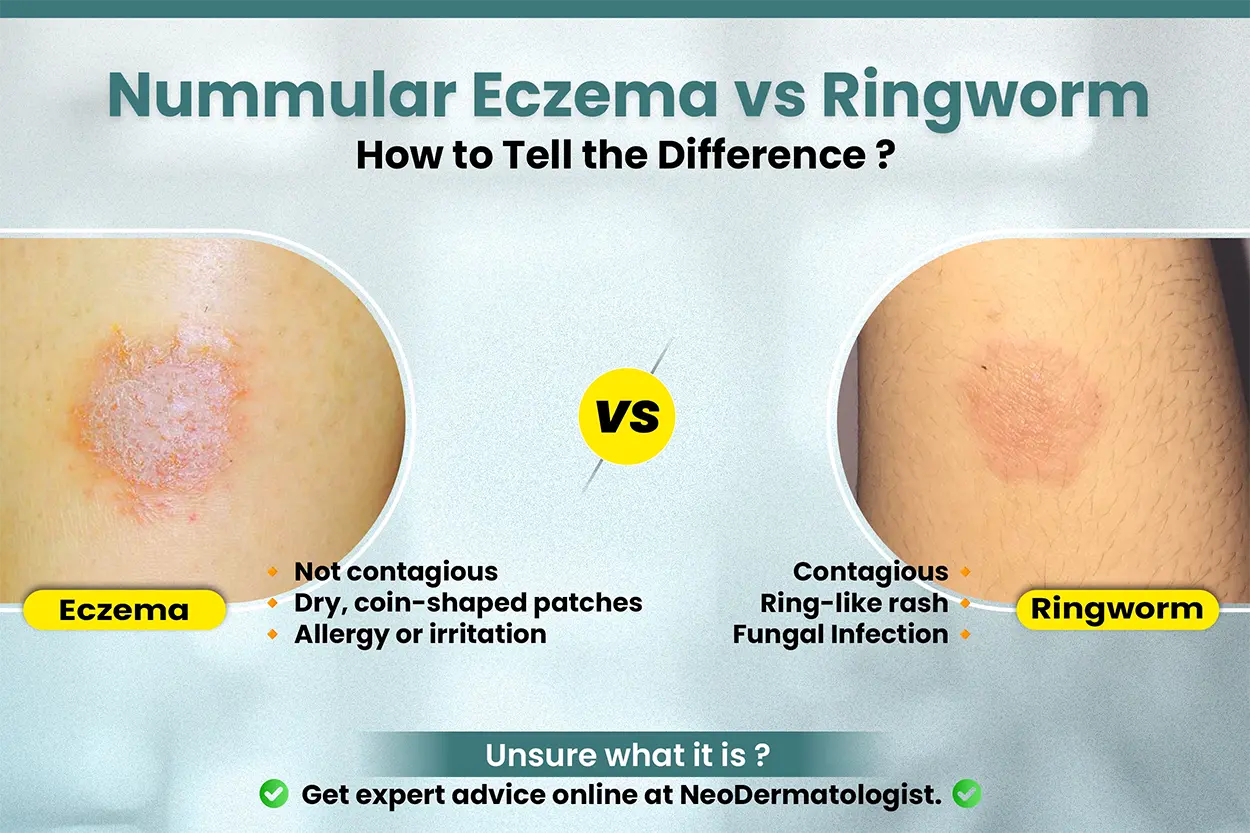
Nummular dermatitis:
-
Psoriasis:
-
Well-demarcated plaques
-
Thick silvery scales
-
Ichthyosis:
-
Generalized scaling
-
Minimal/no inflammation
-
Cutaneous lymphoma:
-
Tinea corporis:
-
Annular lesions
-
Central clearing


4
Complications
-
Secondary infections:
-
Nummular eczema:
-
Chronic persistence:
Investigations
Clinical Diagnosis
-
Based on:
-
History
-
Physical examination
Laboratory Tests
-
Not routinely required
-
Indicated only in:
Skin Biopsy
Management
General Measures
Environmental Adjustments
-
Humidify indoor air
-
Avoid:
-
Reduce exposure to:
Lifestyle Modifications
First-Line Treatment
Moisturizers (Emollients)
Types
Soap Substitutes
Topical Corticosteroids


4
Second-Line Treatment
Third-Line Treatment
Adjunct Therapies
-
Antibiotics:
-
Coal tar:
-
Wet dressings:
Prognosis
Course
Outcomes
-
Untreated:
-
Early treatment:
Conclusion
✔ Early intervention is key to prevent chronicity and complications
Ready to study offline?
Get the full PDF version of this chapter.
 Continue with Google