Mar 21, 2026
PDF Available
Topic Overview
Acrodermatitis Continua of Hallopeau (ACH)
Definition and Overview
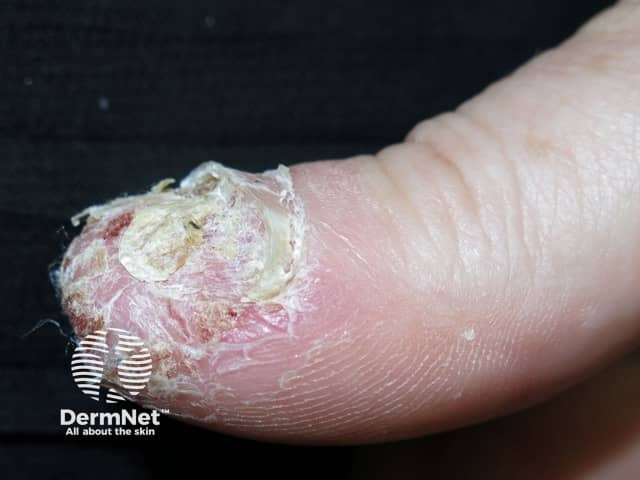


4
-
A rare, chronic, and sterile pustular skin disorder affecting the fingers or toes.
-
Often involves the nail beds, leading to deformity or destruction of the distal phalanx.
-
Considered a localized variant of pustular psoriasis with unique features and progression.
Epidemiology
-
Rarity: Uncommon disorder, mostly sporadic cases.
-
Age of Onset: Can occur at any age, more common in adults and elderly.
-
Gender Predominance: Slight female predominance.
Triggering Factors:
-
Minor trauma, infections, external irritants.
-
May be exacerbated by systemic corticosteroids.
Clinical Features
Initial Presentation
-
Primary Lesion:
-
Erythematous, scaly patches or plaques.
-
Sterile pustules at tips of fingers (rarely toes).
-
Commonly involves one or two digits, especially the thumb.
-
Symptoms:
-
Pustules rupture → crusts or erosions.
-
Pain, tenderness, discomfort.
Progression


4
-
Nail Involvement:
-
Nail folds, bed, matrix involvement →
-
Chronic disease → permanent nail destruction
-
Bone and Joint Changes:
-
Spread:
-
Generalization:
Morphological Patterns
-
Localized Pattern: Limited to one/few digits, chronic course.
-
Diffuse Pattern: Progressive spread with generalized pustulation.
Pathogenesis


4
-
Autoimmune Nature:
-
Genetic Associations:
-
Mutations in IL36RN
-
Mutations in AP1S3
-
Triggers:
Histopathology


4
-
Subcorneal neutrophilic pustules (hallmark).
-
Spongiform pustules, parakeratosis, epidermal thinning.
-
Chronic cases:
-
Epidermal atrophy
-
Fibrosis
-
Dermal inflammation
-
Key feature: Absence of infectious agents in pustules.
Investigations
Differential Diagnosis
-
Infectious:
-
Herpetic whitlow
-
Candidiasis
-
Inflammatory:
-
Psoriatic arthritis
-
Onychomycosis
-
Parakeratosis pustulosa
-
Traumatic:
-
Traumatic onycholysis
-
Contact dermatitis
Disease Course
Complications:
Management and Treatment
Local Treatments
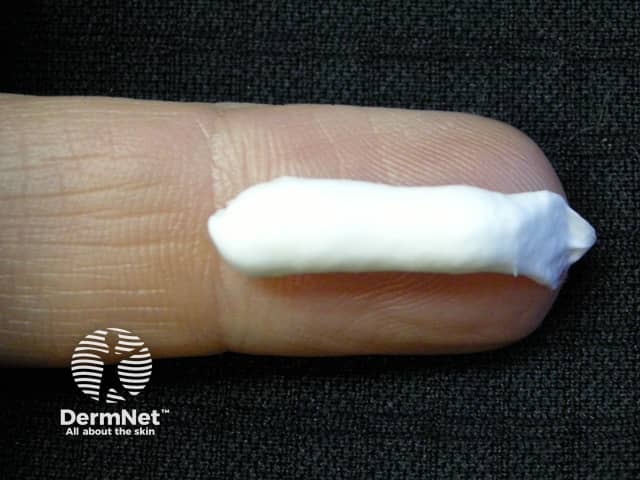
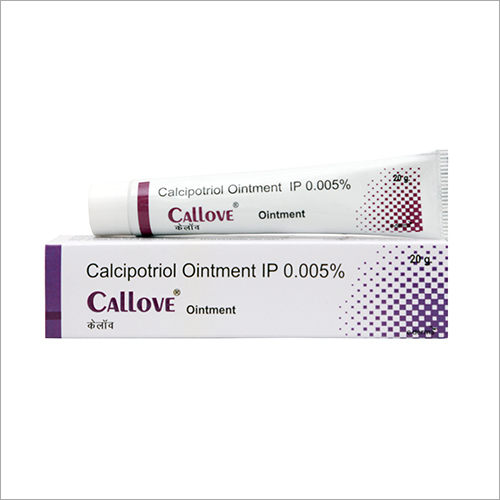

4
Systemic Treatments
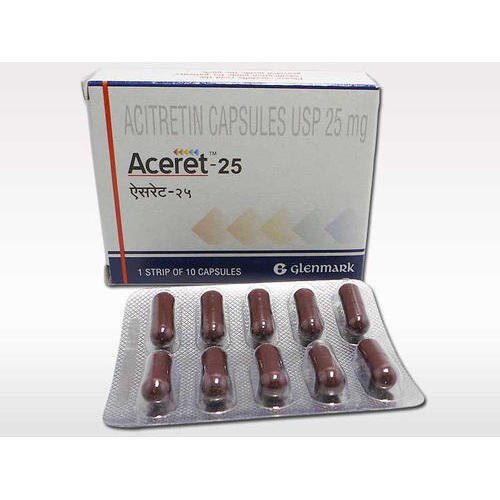

5
-
First-line:
-
Second-line:
-
Biologics:
-
TNF-α inhibitors (Infliximab, Adalimumab)
-
IL-17 inhibitors (Secukinumab)
-
IL-23 inhibitors (Ustekinumab)
-
IL-1 blockade: Anakinra
Combination Therapy
-
Acitretin + PUVA
-
Methotrexate + biologics
Supportive Care
Prognosis
-
Localized ACH:
-
Generalized ACH:
Key Points


4
-
Early diagnosis prevents nail loss and bone deformities.
-
IL36RN mutation testing helps guide biologic therapy.
-
Long-term remission often requires multimodal treatmen
Ready to study offline?
Get the full PDF version of this chapter.
 Continue with Google