Bacillary Angiomatosis


Definition
Bacillary angiomatosis is an uncommon vascular proliferative disorder.
• Primarily affects individuals with HIV/AIDS or severe immunosuppression.
• It is caused by Bartonella henselae and Bartonella quintana.
Epidemiology
• Predominantly reported in the USA, but also in Europe.
• Infection is sporadic, with no consistent history of cat exposure or skin injury.
Pathophysiology
• Bartonella species stimulate angiogenesis in vascular endothelium.
• The organisms may enter red blood cells and spread hematogenously.
Causative Organisms
• Bartonella henselae (cat reservoir).
• Bartonella quintana (human reservoir, transmitted by body lice).
Clinical Features
1. Presentation
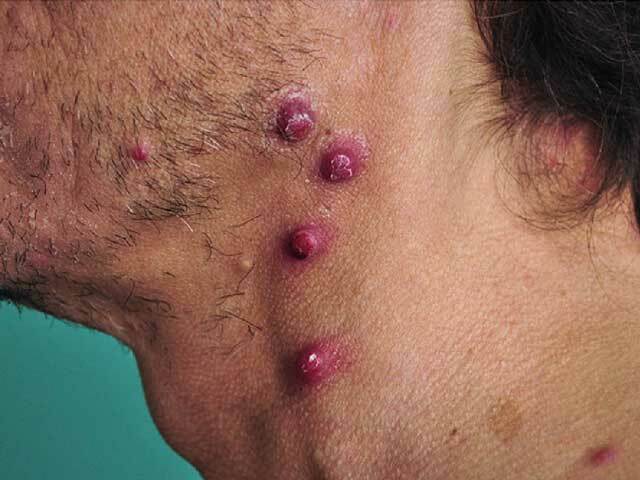
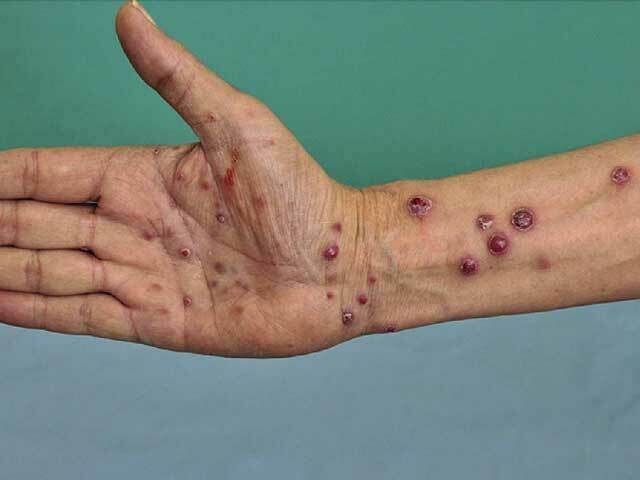
Skin lesions vary widely:
• Solitary or in crops.
• Small papules or nodules, resembling pyogenic granulomas.
• Lesions may involve mucosal surfaces.
• Local lymphadenopathy is common.

2. Lesion Characteristics
• Lobular proliferation of small blood vessels with swollen endothelial cells.
• Bacteria clusters are visible with Warthin–Starry stain.
3. Complications
Bacillary Peliosis
• Cyst-like inflammatory lesions in internal organs such as the liver.
• Endothelial cells in these spaces contain organisms.
Differential Diagnosis
• Kaposi sarcoma
• Pyogenic granuloma
• Cutaneous lymphomas
• Molluscum contagiosum
• Verruga peruana
Investigations
Diagnosis is based on:
• Appearance of typical lesions.
• Presence of bacterial clusters on Warthin–Starry staining.
• PCR increasingly used for confirmation.
Management
Antibiotics
Effective treatments include:
• Doxycycline
• Erythromycin
Treatment duration: at least 8 weeks.
• Prolonged therapy is often necessary due to relapses.
Prognosis
• Lesions persist without treatment but respond well to antibiotics.
Disease Course
• Lesions typically remain unless treated, underscoring the importance of early diagnosis and management.
 Continue with Google