Introduction to Cardiovascular System
Introduction


4
• Definition of cardiovascular system
• The cardiovascular system, also known as the circulatory system, is the system responsible for transport of blood, nutrients, gases, hormones, and metabolic waste throughout the body.
• Components of the system
• Heart
• The heart is a muscular pumping organ that maintains blood circulation by rhythmic contraction.
• Blood vessels
• Blood vessels form a network of tubes through which blood circulates.
• These include arteries, arterioles, capillaries, venules, and veins.
• Blood
• Blood is the circulating fluid that transports oxygen, nutrients, hormones, and waste products between different tissues.
• Functions of cardiovascular system
• Transport of oxygen from lungs to tissues and carbon dioxide from tissues to lungs.
• Delivery of nutrients and hormones to body cells.
• Removal of metabolic waste products.
• Regulation of body temperature, pH, and fluid balance.
• Pulmonary circulation
• Pulmonary circulation refers to the movement of blood between the heart and lungs.
• Deoxygenated blood from the right ventricle travels to the lungs, where it becomes oxygenated and returns to the left atrium.
• Systemic circulation
• Systemic circulation involves transport of oxygenated blood from the left ventricle to all parts of the body.
• After delivering oxygen and nutrients, deoxygenated blood returns to the right atrium of the heart.
• Role in homeostasis
• The cardiovascular system helps maintain internal stability (homeostasis) by regulating blood pressure, temperature, electrolyte balance, and distribution of nutrients and oxygen.
• Clinical relevance
• Disorders of the cardiovascular system include hypertension, coronary artery disease, heart failure, and stroke, which can significantly affect body function and survival.
Anatomical Considerations of the Heart


4
• Location of the heart in thoracic cavity
• The heart is located in the thoracic cavity between the lungs.
• It lies behind the sternum and above the diaphragm.
• Position in mediastinum
• The heart is situated in the middle mediastinum, a central compartment of the thoracic cavity.
• About two-thirds of the heart lies to the left of the midline and one-third to the right.
• Coverings of the heart (pericardium)
• The heart is enclosed within a double-walled sac called the pericardium.
• The pericardium consists of:
• Fibrous pericardium – outer tough protective layer.
• Serous pericardium – inner layer with parietal and visceral layers.
• The pericardial cavity between these layers contains pericardial fluid, reducing friction during heart movements.
• Chambers of the heart
• The heart contains four chambers that regulate blood flow.
• Right atrium
• Receives deoxygenated blood from the body through the superior and inferior vena cava.
• Right ventricle
• Pumps deoxygenated blood to the lungs through the pulmonary artery.
• Left atrium
• Receives oxygenated blood from the lungs through the pulmonary veins.
• Left ventricle
• Pumps oxygenated blood to the entire body through the aorta.
• Septa separating chambers
• The chambers are separated by muscular partitions called septa.
• Interatrial septum separates the atria.
• Interventricular septum separates the ventricles.
• Great vessels connected to heart
• Major blood vessels connected to the heart include:
• Superior vena cava
• Inferior vena cava
• Pulmonary artery
• Pulmonary veins
• Aorta.
• Blood flow pathway through heart
• Blood flows through the heart in the following sequence:
• Body → Right atrium → Right ventricle → Pulmonary artery → Lungs → Pulmonary veins → Left atrium → Left ventricle → Aorta → Body.
Valves of the Heart


4
• Function of cardiac valves
• Cardiac valves ensure one-way flow of blood through the heart chambers.
• They open and close according to pressure differences between chambers and vessels.
• Their main function is to prevent backward flow of blood during the cardiac cycle.
• Atrioventricular valves
• Atrioventricular (AV) valves are located between the atria and ventricles.
• They allow blood to flow from atria to ventricles during ventricular filling.
• Tricuspid valve
• The tricuspid valve lies between the right atrium and right ventricle.
• It has three cusps (leaflets) and prevents backflow of blood into the right atrium during ventricular contraction.
• Mitral (bicuspid) valve
• The mitral valve is located between the left atrium and left ventricle.
• It has two cusps and prevents backflow of blood into the left atrium during ventricular systole.
• Semilunar valves
• Semilunar valves are located at the exits of the ventricles where blood leaves the heart.
• Pulmonary valve
• The pulmonary valve is present between the right ventricle and pulmonary artery.
• It prevents backflow of blood from the pulmonary artery into the right ventricle.
• Aortic valve
• The aortic valve lies between the left ventricle and the aorta.
• It prevents backflow of blood from the aorta into the left ventricle.
• Structure of valves
• Cardiac valves are composed of fibrous connective tissue covered by endocardium.
• Atrioventricular valves are supported by chordae tendineae and papillary muscles, which prevent valve prolapse during ventricular contraction.
• Prevention of backflow
• During ventricular contraction, the valves close tightly to prevent regurgitation of blood.
• This mechanism maintains efficient forward flow of blood through the circulatory system.
Action of the Valves


4
• Opening and closing during cardiac cycle
• Cardiac valves open and close rhythmically during the cardiac cycle.
• Their movement ensures that blood flows in the correct direction through the heart chambers and great vessels.
• Pressure differences controlling valve movement
• The opening and closing of valves are controlled by pressure differences between adjacent chambers and vessels.
• When pressure behind a valve exceeds the pressure ahead, the valve opens.
• When the pressure ahead becomes greater, the valve closes.
• Valve closure producing heart sounds
• Closure of the valves produces the normal heart sounds heard during auscultation.
• First heart sound (S1) occurs due to closure of atrioventricular valves (mitral and tricuspid).
• Second heart sound (S2) occurs due to closure of semilunar valves (aortic and pulmonary).
• Coordination with ventricular contraction
• During ventricular systole, the atrioventricular valves close and the semilunar valves open, allowing blood to be ejected from the ventricles.
• During ventricular diastole, the semilunar valves close and the atrioventricular valves open, allowing blood to fill the ventricles.
• Importance in maintaining unidirectional blood flow
• Proper functioning of the valves ensures unidirectional flow of blood through the heart and circulation.
• Valve dysfunction can lead to regurgitation or stenosis, impairing efficient cardiac function.
Histology of the Cardiac Muscle


4
• Cardiac muscle fibre structure
• Cardiac muscle fibres are short, cylindrical cells that branch and interconnect with neighboring fibres.
• These interconnected cells form a network within the myocardium.
• Striated appearance
• Cardiac muscle shows alternating dark and light bands (striations) due to the regular arrangement of actin and myosin filaments within sarcomeres.
• Branching fibres
• Unlike skeletal muscle, cardiac muscle fibres branch and join with adjacent cells, allowing efficient spread of electrical impulses.
• Single central nucleus
• Each cardiac muscle cell usually contains one centrally located nucleus, though occasionally two nuclei may be present.
• Intercalated discs
• Adjacent cardiac muscle cells are connected by intercalated discs, which contain desmosomes, fascia adherens, and gap junctions.
• These structures provide mechanical strength and rapid electrical conduction between cells.
• Abundant mitochondria
• Cardiac muscle fibres contain large numbers of mitochondria, supplying the ATP required for continuous rhythmic contraction of the heart.
• Sarcomere organization
• Myofibrils in cardiac muscle are arranged in sarcomeres, which act as the functional units responsible for contraction.
Arterioles


4
• Small branches of arteries
• Arterioles are the small branches of arteries that lead to capillary networks.
• Thick smooth muscle layer
• The walls of arterioles contain a relatively thick layer of smooth muscle in the tunica media.
• This muscular layer allows active regulation of vessel diameter.
• Major resistance vessels
• Arterioles are known as the major resistance vessels of the circulatory system.
• Changes in their diameter significantly influence peripheral resistance to blood flow.
• Regulation of blood flow to tissues
• By constricting or dilating, arterioles regulate the amount of blood reaching different tissues according to metabolic needs.
• Role in blood pressure regulation
• Because they control peripheral vascular resistance, arterioles play a major role in maintaining and regulating systemic blood pressure.
Capillaries


4
• Smallest blood vessels
• Capillaries are the smallest blood vessels in the circulatory system.
• They connect arterioles to venules, forming an extensive capillary network within tissues.
• Single endothelial cell layer
• The wall of a capillary consists of a single layer of endothelial cells resting on a basement membrane.
• This thin structure facilitates efficient exchange of substances between blood and tissues.
• Site of exchange between blood and tissues
• Capillaries are the primary sites where exchange of oxygen, nutrients, carbon dioxide, and metabolic waste occurs between blood and body tissues.
• Types of capillaries
• Continuous capillaries
• These capillaries have a continuous endothelial lining with small intercellular clefts.
• They are found in muscles, skin, lungs, and the central nervous system.
• Fenestrated capillaries
• Fenestrated capillaries contain small pores (fenestrations) in the endothelial cells.
• These pores allow rapid exchange of fluids and small molecules.
• They are commonly found in kidneys, endocrine glands, and intestines.
• Sinusoidal capillaries
• Sinusoidal capillaries have large openings and discontinuous endothelial lining, allowing passage of larger molecules and cells.
• Diffusion and filtration functions
• Exchange across capillaries occurs mainly through diffusion, filtration, and osmosis.
• These processes maintain nutrient supply and waste removal in tissues.
Sinusoids


4
• Specialized capillaries
• Sinusoids are a specialized type of capillary with unique structural features that allow extensive exchange between blood and surrounding tissues.
• Larger lumen and discontinuous endothelium
• They possess a large irregular lumen and discontinuous endothelial lining with wide gaps.
• The basement membrane may also be incomplete or absent.
• Slower blood flow
• Blood flow through sinusoids is slower compared to normal capillaries, allowing greater time for exchange of substances.
• Found in liver, spleen, bone marrow
• Sinusoids are commonly present in organs involved in filtration and blood cell production, such as the liver, spleen, and bone marrow.
• Facilitate exchange of large molecules
• Due to their large openings, sinusoids permit passage of large plasma proteins, cells, and other macromolecules between blood and tissues.
• This property is essential for functions like detoxification in the liver and blood cell formation in bone marrow.
Valves of the Veins


4
• Structure of venous valves
• Venous valves are thin flap-like structures present inside many veins.
• They project into the lumen and usually occur as paired cusps.
• Formed by folds of endothelium
• These valves are formed by folds of the tunica intima (endothelial lining of the vein) reinforced by connective tissue.
• Prevent backflow of blood
• Venous valves allow blood to flow only toward the heart.
• When blood tends to flow backward, the valve cusps close and prevent regurgitation.
• Important in venous return
• Valves assist the return of blood to the heart, especially against gravity.
• They work together with skeletal muscle contraction (muscle pump) to facilitate venous return.
• More prominent in lower limb veins
• Venous valves are particularly well developed in veins of the lower limbs, where blood must travel upward toward the heart against gravity.
Blood Vessels (Vasa Vasorum)


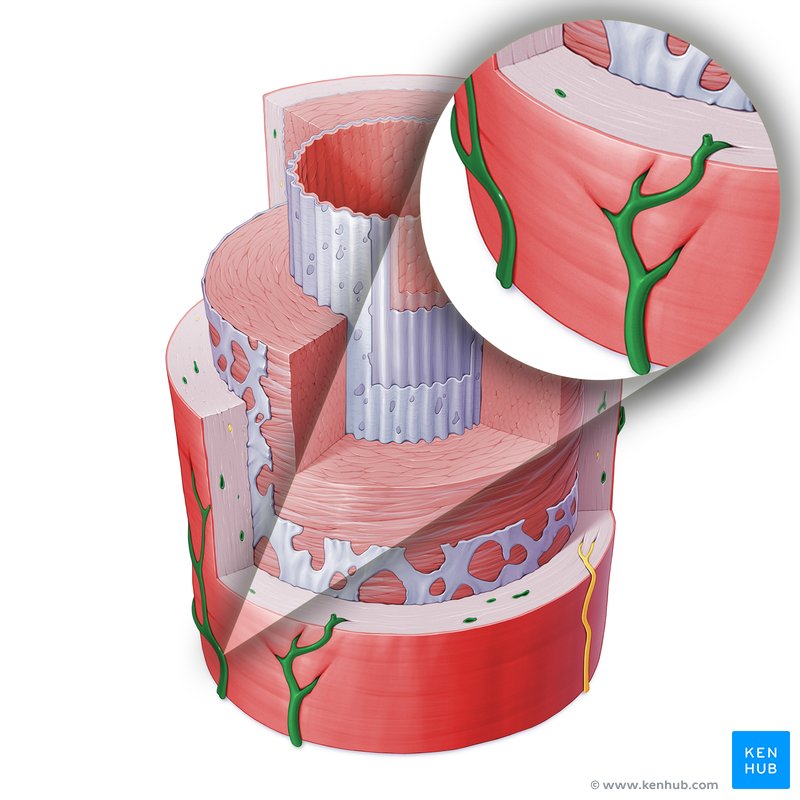
4
• Definition
• Vasa vasorum are small blood vessels that supply the walls of large arteries and veins.
• Small vessels supplying large arteries and veins
• Large blood vessels have thick walls that cannot receive sufficient nutrients directly from the blood flowing through the lumen.
• Therefore, the vasa vasorum provide an additional blood supply to the vessel wall.
• Provide nutrients to vessel walls
• These vessels deliver oxygen and nutrients to the outer layers of the blood vessel wall and help remove metabolic waste.
• Located in outer layers of vessel
• Vasa vasorum are mainly located in the tunica adventitia and outer part of the tunica media of large arteries and veins.
• Important in large vessel physiology
• They play an important role in maintaining the health and function of large blood vessels.
• Damage or dysfunction of the vasa vasorum may contribute to vascular diseases such as atherosclerosis.
Lymphatics of Blood Vessels


4
• Presence of lymphatic vessels in vessel walls
• Small lymphatic vessels are present in the outer layers of large blood vessels, particularly in the tunica adventitia.
• These lymphatics accompany the vasa vasorum and connective tissue surrounding the vessels.
• Drainage of excess fluid from vessel tissues
• Lymphatic vessels help remove excess interstitial fluid from the tissues of the vessel wall.
• This prevents fluid accumulation and maintains proper tissue environment.
• Role in immune defense
• Lymphatics transport immune cells such as lymphocytes and macrophages.
• They also carry antigens and foreign particles to lymph nodes, contributing to the body’s immune response.
• Maintenance of tissue fluid balance
• By draining excess interstitial fluid and returning it to the circulation, lymphatic vessels help maintain tissue fluid balance and normal vascular function.
Special Junctional Tissues


4
• Specialized cardiac conduction system
• The heart contains a specialized system of modified cardiac muscle fibres known as junctional or conduction tissues.
• These tissues are responsible for generation and conduction of electrical impulses throughout the heart.
• Responsible for generation and conduction of impulses
• The conduction system produces spontaneous electrical impulses and transmits them rapidly through the myocardium.
• Coordinates rhythmic contraction of heart
• This system ensures coordinated contraction of atria and ventricles, allowing efficient pumping of blood.
• Components of conduction system
• The cardiac conduction system includes:
• Sinoatrial (SA) node
• Atrioventricular (AV) node
• Bundle of His
• Right and left bundle branches
• Purkinje fibres.
Sino-atrial (SA) Node


4
• Location in right atrium
• The SA node is located in the wall of the right atrium near the opening of the superior vena cava.
• Natural pacemaker of the heart
• The SA node is known as the natural pacemaker because it initiates electrical impulses that determine the heart rhythm.
• Generates spontaneous electrical impulses
• Cells of the SA node have the ability to generate impulses automatically without external stimulation.
• Sets heart rate
• The rate at which the SA node generates impulses determines the heart rate under normal conditions.
• Initiates cardiac cycle
• The electrical impulse produced by the SA node spreads through the atrial myocardium, initiating atrial contraction and the beginning of the cardiac cycle.
Atrioventricular (AV) Node

4
• Located in interatrial septum near AV junction
• The atrioventricular (AV) node is located in the lower part of the interatrial septum near the atrioventricular junction, close to the opening of the coronary sinus.
• Receives impulses from SA node
• Electrical impulses generated by the sinoatrial (SA) node travel through the atrial myocardium and reach the AV node.
• Delays conduction before ventricular activation
• The AV node introduces a short delay in impulse conduction before transmitting the signal to the ventricles.
• This delay allows sufficient time for the atria to contract and push blood into the ventricles.
• Ensures proper atrial contraction before ventricular contraction
• Because of this delay, atrial systole occurs before ventricular systole, ensuring efficient filling of the ventricles.
Bundle of His


4
• Conducting pathway from AV node to ventricles
• The bundle of His, also called the atrioventricular bundle, is the pathway that conducts impulses from the AV node to the ventricles.
• Located in interventricular septum
• It passes from the AV node into the upper part of the interventricular septum.
• Divides into right and left bundle branches
• The bundle of His divides into right and left bundle branches, which run along the interventricular septum toward the apex of the heart.
• Transmits impulses rapidly to ventricular muscle
• These bundle branches conduct impulses to Purkinje fibres, which distribute the electrical signal throughout the ventricular myocardium, producing coordinated ventricular contraction.
Purkinje Fibres
4
• Terminal branches of cardiac conduction system
• Purkinje fibres are the terminal branches of the cardiac conduction system.
• They arise from the right and left bundle branches of the bundle of His.
• Spread impulses through ventricular myocardium
• These fibres extend throughout the ventricular walls and distribute electrical impulses to the ventricular muscle cells.
• Rapid conduction velocity
• Purkinje fibres conduct impulses very rapidly due to their large diameter and specialized structure.
• This allows the electrical signal to reach all parts of the ventricles almost simultaneously.
• Ensures coordinated ventricular contraction
• Because of rapid impulse transmission, both ventricles contract in a coordinated manner, enabling efficient ejection of blood into the pulmonary artery and aorta.
 Continue with Google