📚 Study Resource

Iron Absorption, Transport, Storage and Excretion

Free Article

Enhance your knowledge with our comprehensive guide and curated study materials.

Mar 04, 2026 PDF Available

Topic Overview

Introduction (Iron)

  • Definition of iron in physiology

    • Iron = an essential trace mineral required mainly for oxygen transport and cellular oxidation reactions (because it forms part of haemoglobin/myoglobin and several oxidase enzymes).

  • Total body iron content

    • RBC iron (in Hb) ≈ ~3 g (total quantity present in all red cells).

    • Rest of the body ≈ ~1–3 g (tissue iron pool).

    • Whole blood contains ~45–50 mg iron/100 mL.

  • Distribution in body

    • Haemoglobin (major share in blood)

      • Hb contains ~92–98% of total blood iron.

    • Myoglobin

      • Iron is present as iron-porphyrin in myoglobin (muscle oxygen store).

    • Enzymes

      • Iron-containing enzymes include catalase, cytochrome, peroxidase (tissue oxidation).

    • Storage form

      • Stored mainly as ferritin (water-soluble) and haemosiderin (granular, insoluble).

      • Storage sites: reticuloendothelial system—especially liver, spleen, bone marrow.

    • Transport/other forms

      • Iron also exists in functional pools like transferrin, ferritin, haemosiderin.

  • Importance in oxygen transport

    • Hb formation is the primary function of iron.

    • Oxygen carriage: 1 g Hb carries ~1.34 mL O₂ when fully saturated.

    • Myoglobin supplies O₂ to muscle and acts as an oxygen store.

  • Clinical relevance

    • Body iron is controlled mainly by regulation of absorption (not excretion); excretion is only in traces (urine/bile/faeces).

    • Iron loss states: pregnancy, labour, menstrual blood loss → can predispose to iron deficiency.

    • If iron loss exceeds absorption → Hb falls → anaemia develops.


Absorption and Transport (Iron)


https://images.openai.com/static-rsc-3/IgEd-bCVe-dHDmw3bwSa1zLB9rjEYlnDo3U4A2tJkv7av14cLc9RiLVpAdeVUmPb2zkFRb70Bi5C8dsfCou6tbb2itOw9AkPFLJfnIcp27c?purpose=fullsize&v=1


https://www.researchgate.net/publication/347798474/figure/fig1/AS%3A11431281211963668%401702509136133/Absorption-of-haem-and-non-haem-iron-through-the-duodenal-enterocyte-Non-haem-absorption.tif


https://images.openai.com/static-rsc-3/C-19f1gC1FZ7g0hQw2Vyr6YQ7MZwGRa7q1Lt4X9puF0oOQuNKnZlcTC1GjGk28SAFx87Sq_3wv-30K0WLD_-sQfV9f7jixaC9R0NLoRjPE4?purpose=fullsize&v=1

4

  • Site of absorption

    • Mainly in the duodenum and upper jejunum.

    • Enterocytes of proximal small intestine are specially adapted for iron uptake.

  • Forms of dietary iron

    • Heme iron

      • Present in animal sources (meat, liver, fish).

      • Absorbed intact via heme carrier protein.

      • Better absorbed (less affected by dietary factors).

    • Non-heme iron

      • Present in plant sources (green leafy vegetables, cereals, pulses).

      • Usually in ferric (Fe³⁺) form.

      • Must be reduced to ferrous (Fe²⁺) form for absorption.

      • Absorption is less efficient and more variable.

  • Factors affecting absorption

    • Increased by:

      • Iron deficiency state

      • Increased erythropoiesis

      • Pregnancy

      • Vitamin C

    • Decreased by:

      • Phytates (cereals)

      • Oxalates

      • Tannins (tea)

      • Excess calcium

  • Role of gastric acid

    • Converts ferric (Fe³⁺) → ferrous (Fe²⁺) form.

    • Maintains iron in soluble form.

    • Achlorhydria → ↓ iron absorption.

  • Role of vitamin C

    • Reduces Fe³⁺ → Fe²⁺.

    • Forms soluble complexes with iron.

    • Enhances non-heme iron absorption.

  • Regulation by body iron stores

    • Low iron stores → ↑ absorption.

    • High iron stores → ↓ absorption.

    • Regulation occurs mainly at the level of intestinal mucosa.

  • Hepcidin regulation (concept)

    • Hepcidin = hormone produced by liver.

    • High hepcidin:

      • Blocks ferroportin (iron exporter) in enterocytes and macrophages.

      • ↓ iron release into plasma.

    • Low hepcidin:

      • ↑ ferroportin activity.

      • ↑ iron absorption and release.

    • Acts as the master regulator of iron metabolism.

  • Transport in plasma

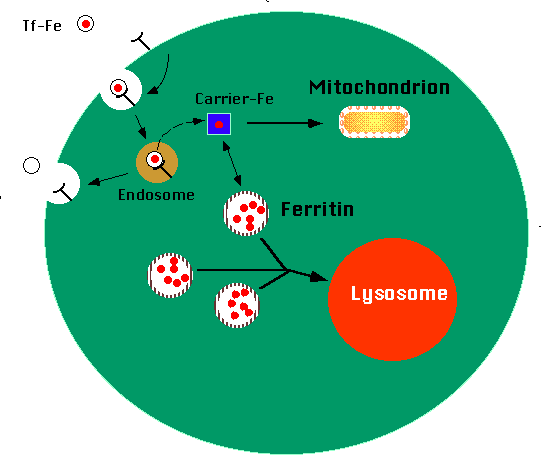
    • Iron transported in plasma bound to transferrin.

    • Each transferrin molecule binds two Fe³⁺ ions.

    • Transferrin delivers iron mainly to:

      • Bone marrow (for Hb synthesis)

      • Liver (for storage)

      • Other tissues (for enzymes)


Absorption of Iron


https://images.openai.com/static-rsc-3/qVF6a7llK8x907lrKHB2zq7WQ5M3jKvERNS6dCvwME3uFPH4KYFunIOEj_EuxRU_02R7Rm3PNZMmNzT1WngMRKVAMUJ2rksUcrSbx72RNwU?purpose=fullsize&v=1


https://www.researchgate.net/publication/50851364/figure/fig2/AS%3A340577104220165%401458211317808/Enterocyte-iron-absorption-The-critical-entry-transporter-on-the-apical-surface-of-the.png


https://www.researchgate.net/publication/273311041/figure/fig1/AS%3A272541923147783%401441990466474/Regulation-of-iron-export-from-enterocytes-by-hepcidin-and-ferroportin-interaction-DMT1.png

4

  • Reduction of ferric (Fe³⁺) to ferrous (Fe²⁺) form

    • Dietary non-heme iron is mainly in ferric (Fe³⁺) form.

    • At the brush border of enterocytes, Fe³⁺ is reduced to ferrous (Fe²⁺) form.

    • This reduction is essential because only Fe²⁺ can be transported into the cell.

  • Transport across enterocyte membrane

    • Fe²⁺ crosses the apical membrane of enterocyte.

    • Occurs mainly in the duodenum.

  • Role of divalent metal transporter (DMT1 concept)

    • DMT1 (Divalent Metal Transporter-1) transports Fe²⁺ into enterocyte.

    • It is a proton-coupled transporter.

    • Also transports other divalent metals (e.g., Mn²⁺).

  • Storage as ferritin in enterocytes

    • Inside enterocyte, iron may:

      • Bind to ferritin for temporary storage.

    • If not required by body → stored iron is lost when enterocytes are shed.

    • This is called the mucosal block theory (physiological control mechanism).

  • Transfer to plasma via ferroportin

    • If body requires iron:

      • Fe²⁺ exits enterocyte through ferroportin (basolateral membrane iron exporter).

    • Ferroportin is the only known iron export protein.

  • Oxidation to ferric form

    • During transfer to plasma:

      • Fe²⁺ is oxidized back to Fe³⁺.

    • This step is necessary for binding to transferrin.

  • Regulation mechanism

    • Controlled mainly by body iron stores and hepcidin.

    • High hepcidin:

      • Degrades ferroportin.

      • ↓ iron absorption.

    • Low hepcidin:

      • ↑ ferroportin activity.

      • ↑ iron absorption.

    • Thus, regulation occurs at the level of intestinal absorption, not excretion.

  • Clinical relevance

    • Achlorhydria → ↓ Fe³⁺ reduction → ↓ absorption.

    • Chronic blood loss → ↑ iron absorption (compensatory).

    • Inflammation → ↑ hepcidin → anemia of chronic disease.

    • Excess absorption → risk of iron overload states.


Iron in Blood
 

https://sickle.bwh.harvard.edu/tf-endocytosis.gif


https://med.libretexts.org/%40api/deki/files/69708/figure17.8.jpg?height=525&revision=1&size=bestfit&width=714


https://images.drlogy.com/assets/uploads/img/admin/calci/transferrin%20saturation%20calculator.webp

4

  • Transport protein – Transferrin

    • Iron circulates in plasma bound to transferrin (a β-globulin).

    • Synthesized in the liver.

    • Each transferrin molecule binds two ferric (Fe³⁺) ions.

    • Prevents free iron toxicity and delivers iron to tissues (especially bone marrow).

  • Iron-binding capacity

    • Refers to the ability of transferrin to bind iron.

    • Depends on the amount of transferrin available in plasma.

  • Serum iron

    • Represents the amount of iron bound to transferrin in plasma.

    • Normal value:

      • Males: ~60–170 µg/dL

      • Females: ~50–150 µg/dL

    • Shows diurnal variation (higher in morning).

  • Total Iron-Binding Capacity (TIBC)

    • Measures the maximum amount of iron that transferrin can bind.

    • Indirect measure of transferrin level.

    • Normal value: 250–400 µg/dL.

  • Transferrin saturation

    • Percentage of transferrin binding sites occupied by iron.

    • Formula:

      • Transferrin saturation (%) = (Serum iron / TIBC) × 100

    • Normal value: 20–45%.

  • Normal values (summary)

    • Serum iron: ~60–170 µg/dL

    • TIBC: ~250–400 µg/dL

    • Transferrin saturation: 20–45%

  • Clinical significance

    • Iron deficiency anemia

      • ↓ Serum iron

      • ↑ TIBC

      • ↓ Transferrin saturation

    • Anemia of chronic disease

      • ↓ Serum iron

      • ↓ or normal TIBC

      • ↓ Transferrin saturation

    • Iron overload (e.g., hemochromatosis)

      • ↑ Serum iron

      • ↓ TIBC

      • ↑ Transferrin saturation


Storage of Iron


https://images.openai.com/static-rsc-3/uyPm3IB4FFsldb-zw3DtKPlvrXpEuEr3npYoz0JSd9idQC0OGGygTwDUJBeE5ce2jKwOWWl3v6i6ox1f1_tOzPf3ZKBcXkq5-1lKrXBQkBE?purpose=fullsize&v=1


https://upload.wikimedia.org/wikipedia/commons/6/65/Histopathology_of_siderophage_in_chronic_pulmonary_congestion.jpg


https://images.openai.com/static-rsc-3/i8qHhfrdc-MXCuq8uSdd7Wv0b8sir9bcqzr3NJ1v341vMfzeKSfqJaHT0j6NzCCxjZ6ySj0FXODtD2mo0J1i8TAAD9VyHUBw7UoxpPfySb0?purpose=fullsize&v=1

4

  • Ferritin

    • Main storage form of iron.

    • Water-soluble protein complex.

    • Stores iron in ferric (Fe³⁺) form.

    • Present in cytoplasm of cells.

    • Serum ferritin reflects body iron stores.

  • Hemosiderin

    • Insoluble, granular storage form.

    • Formed when iron stores are excessive.

    • Seen as coarse golden-brown granules on microscopy.

    • Less readily available for mobilization than ferritin.

  • Sites of storage

    • Liver

      • Major storage organ.

      • Iron stored in hepatocytes and Kupffer cells.

    • Spleen

      • Stores iron from breakdown of old RBCs.

    • Bone marrow

      • Iron available for hemoglobin synthesis.

  • Regulation of storage

    • Controlled mainly by body iron requirements and hepcidin.

    • High iron levels → increased storage.

    • Low iron levels → decreased storage.

    • Balance maintained between absorption, utilization, and storage.

  • Mobilization of stored iron

    • Iron released from ferritin when needed.

    • Exported via ferroportin.

    • Binds to transferrin in plasma for transport to bone marrow.

    • Enhanced during anemia and increased erythropoiesis.

  • Clinical importance

    • Serum ferritin = best indicator of total body iron stores.

    • ↓ Ferritin → iron deficiency.

    • ↑ Ferritin → iron overload, inflammation, liver disease.

    • Excess deposition → hemosiderosis, hemochromatosis.


Functions of Iron


https://images.openai.com/static-rsc-3/W9Gu7IejoLMaIxfiEiXaN5MS-nmsxguSNVKNLCqtepNRx44EU5fUCHtkH7HLdL6xIQuigvas_Bq6vYNnj0ZpwMgNAF25yiHd7V9FchbZs0Q?purpose=fullsize&v=1


https://images.openai.com/static-rsc-3/7ndpiitW2SdSU8o28h_E-IoEcZf20slzOOYHf92M7KRo50BMOQYvO6zfwG3nWY0H1ZaMa_U6XF5frWQaI-e0swY7j0GDpEpfFEGmWLuAZsg?purpose=fullsize&v=1


https://images.openai.com/static-rsc-3/fn9Zjr6qgnN6uBL1-GVVbYlM70TieBb9_9fgTi-IfcIBXf3ZscrpL6U099SMtBo6_EnTl8sMbunCcUmPOe0j2NjA1yPM32VstuXfG3uzB2w?purpose=fullsize&v=1

4

  • Hemoglobin synthesis

    • Essential component of heme molecule.

    • Required for formation of hemoglobin (Hb) in RBCs.

    • Each Hb molecule contains four heme groups, each with one iron atom.

    • Enables reversible binding of oxygen.

    • Without iron → defective Hb synthesis → microcytic hypochromic anemia.

  • Myoglobin formation

    • Present in skeletal and cardiac muscle.

    • Acts as oxygen reservoir.

    • Facilitates diffusion of oxygen within muscle cells.

    • Important during intense muscular activity.

  • Enzyme function

    • Component of several iron-containing enzymes, such as:

      • Catalase

      • Peroxidase

      • Cytochromes

    • Participates in oxidation–reduction reactions.

    • Essential for detoxification of hydrogen peroxide.

  • Role in electron transport chain

    • Iron is part of cytochromes and iron–sulfur (Fe–S) proteins.

    • Facilitates electron transfer in mitochondria.

    • Critical for ATP production.

    • Without iron, oxidative phosphorylation is impaired.

  • Role in oxidative metabolism

    • Required for cellular respiration.

    • Participates in redox reactions.

    • Supports efficient utilization of oxygen in tissues.

  • Importance in cell growth and division

    • Required for DNA synthesis (via ribonucleotide reductase enzyme).

    • Essential for rapidly dividing cells (bone marrow, fetal tissues).

    • Deficiency leads to:

      • Impaired growth

      • Reduced cognitive development in children

      • Decreased immunity


Applied: Iron Deficiency Anaemia


https://images.openai.com/static-rsc-3/uiROYlxhRkLNJEDqCINWnUbgoApdWLpNgjBTQ2roB4b0hG1Zy1lwUzvIcDCqRp5m6NVIrKmdlPBUuwpR85nDPLpO1m6zJbNuFRxCUDACGZM?purpose=fullsize&v=1


https://images.openai.com/static-rsc-3/WzDGsXCmCRwdKeeLmqYxCSZSBDkLdL7Z9aF9jkF1WKhi02Hc_9B47X1dMLsxiArSenKExAc_jiKDtLlXm29kbF7foIPeMfDPy4LHH4ZEU2w?purpose=fullsize&v=1


https://media.springernature.com/lw685/springer-static/image/art%3A10.1007%2Fs11606-021-06981-5/MediaObjects/11606_2021_6981_Fig1_HTML.png

4

  • Causes

    • Nutritional deficiency

      • Poor dietary intake.

      • Diet low in heme iron (vegetarian diets without adequate supplementation).

      • Common in children and low socioeconomic groups.

    • Blood loss

      • Chronic gastrointestinal bleeding.

      • Menstrual blood loss (menorrhagia).

      • Hookworm infestation.

      • Repeated blood donation.

    • Malabsorption

      • Celiac disease.

      • Post-gastrectomy state.

      • Achlorhydria (↓ gastric acid → ↓ Fe³⁺ to Fe²⁺ conversion).

    • Increased requirement

      • Pregnancy.

      • Lactation.

      • Infancy and adolescence (rapid growth phase).

  • Pathophysiology

    • ↓ Iron stores → ↓ serum ferritin.

    • ↓ Iron availability for hemoglobin synthesis.

    • Impaired heme formation.

    • Reduced hemoglobin production in developing RBCs.

    • Result: smaller, paler red cells.

  • Microcytic hypochromic anemia

    • Microcytic → decreased MCV.

    • Hypochromic → decreased MCH/MCHC.

    • Peripheral smear shows:

      • Small RBCs.

      • Increased central pallor.

      • Anisopoikilocytosis (variation in size and shape).

  • Clinical features

    • Pallor (skin, conjunctiva).

    • Fatigue and weakness.

    • Dyspnea on exertion.

    • Palpitations.

    • Koilonychia (spoon-shaped nails).

    • Angular cheilitis.

    • Glossitis.

    • Pica (craving for non-food items).

  • Laboratory findings

    • ↓ Hemoglobin.

    • ↓ Serum iron.

    • ↓ Serum ferritin (early marker).

    • ↑ TIBC.

    • ↓ Transferrin saturation.

    • ↓ MCV, ↓ MCH.

  • Prevention principles

    • Iron-rich diet (green leafy vegetables, meat, liver).

    • Iron supplementation in:

      • Pregnancy.

      • Infants and adolescents.

    • Deworming in endemic areas.

    • Early detection and treatment of chronic blood loss.


Ready to study offline?

Get the full PDF version of this chapter.